
Before I sit down to write a post, I usually spend a few hours researching the history of the item I just baked. I sift through multiple websites, reading sometimes conflicting origin stories and trying to figure out which is more accurate. Often it’s impossible to know, in which case I try to share with you, dear reader, the alternate versions and which one is more likely.
In the case of the gâteau de Savoie, or Savoy cake, my job was made so much easier when I stumbled upon a Substack post by Jamie Schler, a food writer who delves into French culinary history. (If you’re interested, you’ll find her Substack here.) She has an entire post on “Gâteau or Biscuit de Savoie.” In it, she confirms what I had read on other websites, that back in the mid-1300s (exact year disputed) Amadeus VI, Count of the Savoy region of what is now France, played host to the Holy Roman Emperor, Charles IV of Luxembourg. In honor of the royal visit, the count asked his head chef (either Pierre de Yenne or Jean de Belleville — again, disputed) to create a special dessert, a cake, “light as a feather.”
The chef did something that was apparently unheard of until then — he separated a bunch of eggs and beat the whites and yolks separately until the whites were light and airy, beating sugar in with the yolks until the mixture was thick and light in color. He then folded the two mixtures together, adding in some flour at the end, and baked the batter in a special mold that was designed to look like the mountain peaks and valleys of the surrounding countryside, topped with an imperial crown.
But interestingly, this new type of cake was not called a cake, or even a gâteau, at the time. It was dubbed a biscuit de Savoie. While we, in the U.S., think of biscuits as scone-like pastries, and our friends in the U.K. use the word to describe what we generally call cookies, the term is derived from the French word meaning, literally, “twice baked.” But in this context, and in early French culinary terminology, biscuit referred to “delicate, light pastries made with eggs, whose whites must be beaten until wrist-tired, with sugar, flour or potato starch and a few herbs or other substances incorporated into the batter.” [Source: Grand Dictionnaire de Cuisine, by Alexandre Dumas and Denis-Joseph Vuillemot, 1873]
The first known published recipe for biscuit de Savoie appeared in François Massialot’s cookbook Le Nouveau Cuisinier Royal et Bourgeois in 1691. By the time the 1730 edition of his cookbook was published, he also included a recipe for gâteau de Savoye.
By the mid-1700s, it seems, the name had changed from biscuit de Savoie to gâteau de Savoie, although recipes for biscuit de Savoie can still be found, including this one that was written down by Thomas Jefferson, probably while he was living in Paris between 1784 and 1789. In addition to traveling to the New World, the Savoy cake had made its way to Britain, where a variety of cakes named after their region of origin (i.e., Naples, Lisbon, Spanish) had become popular.
Savoy cakes were traditionally either left undecorated, with just a light sugar glaze letting the details of the cake mold shine through, or they were highly decorated with gum paste, such as this cake reproduced for a BBC television program about the Netherfield ball portrayed in Jane Austen’s Pride and Prejudice. For the purposes of The Great British Bake Off, this Showstopper challenge for Forgotten Bakes Week was to be a Victorian Savoy cake that is a “light, delicate cake with a hard sugar coating” and served on a plinth that was also made of sponge.
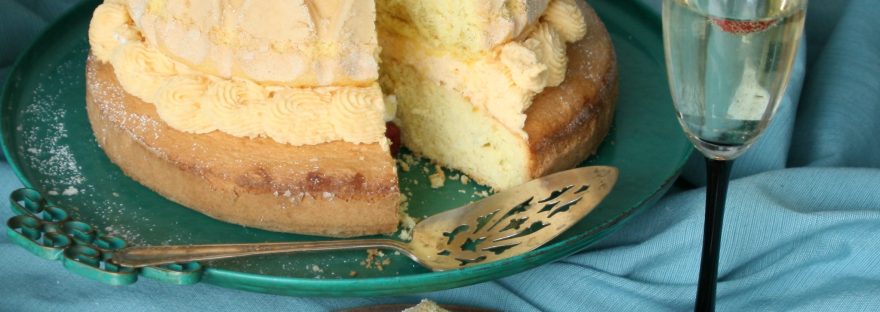
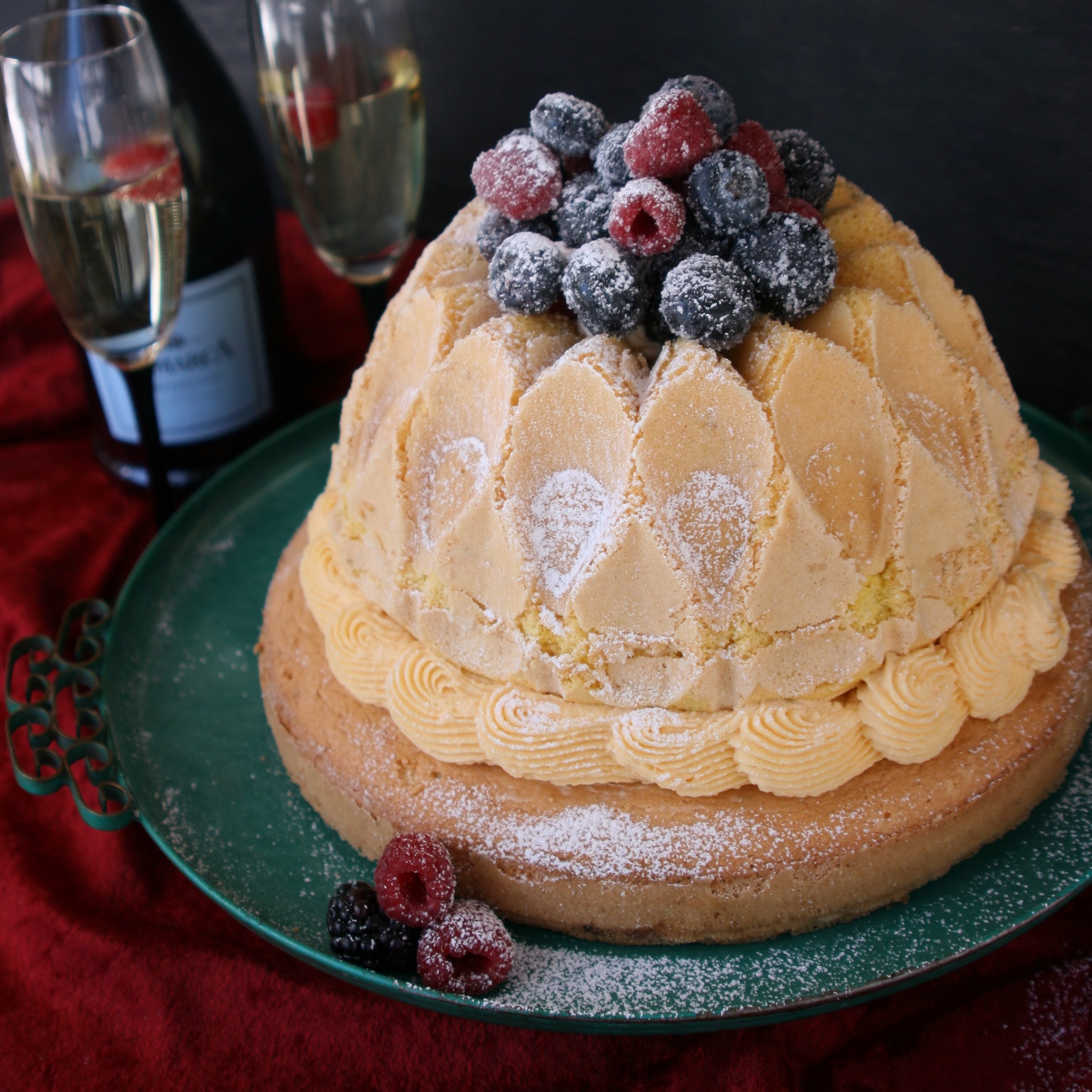
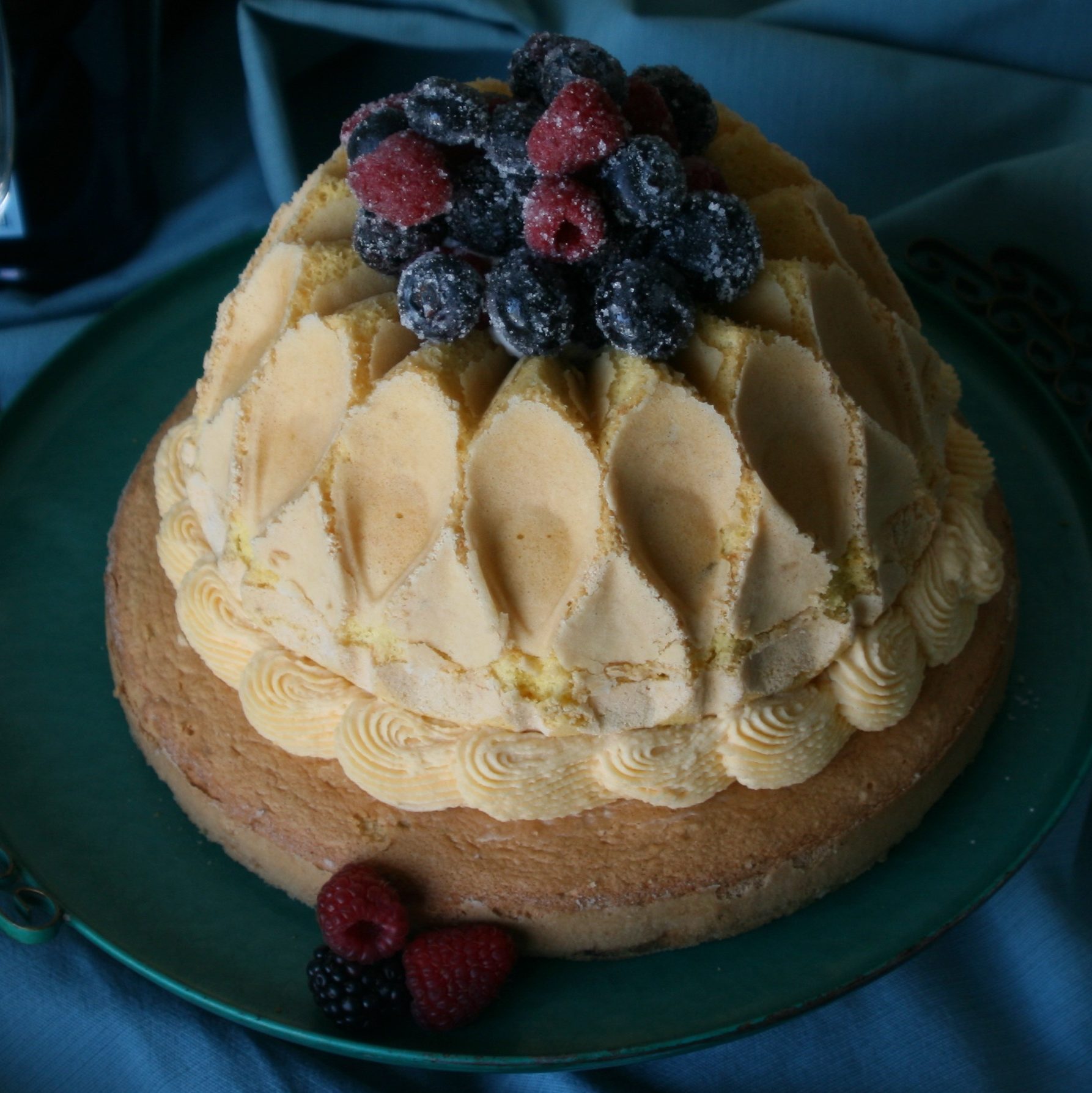
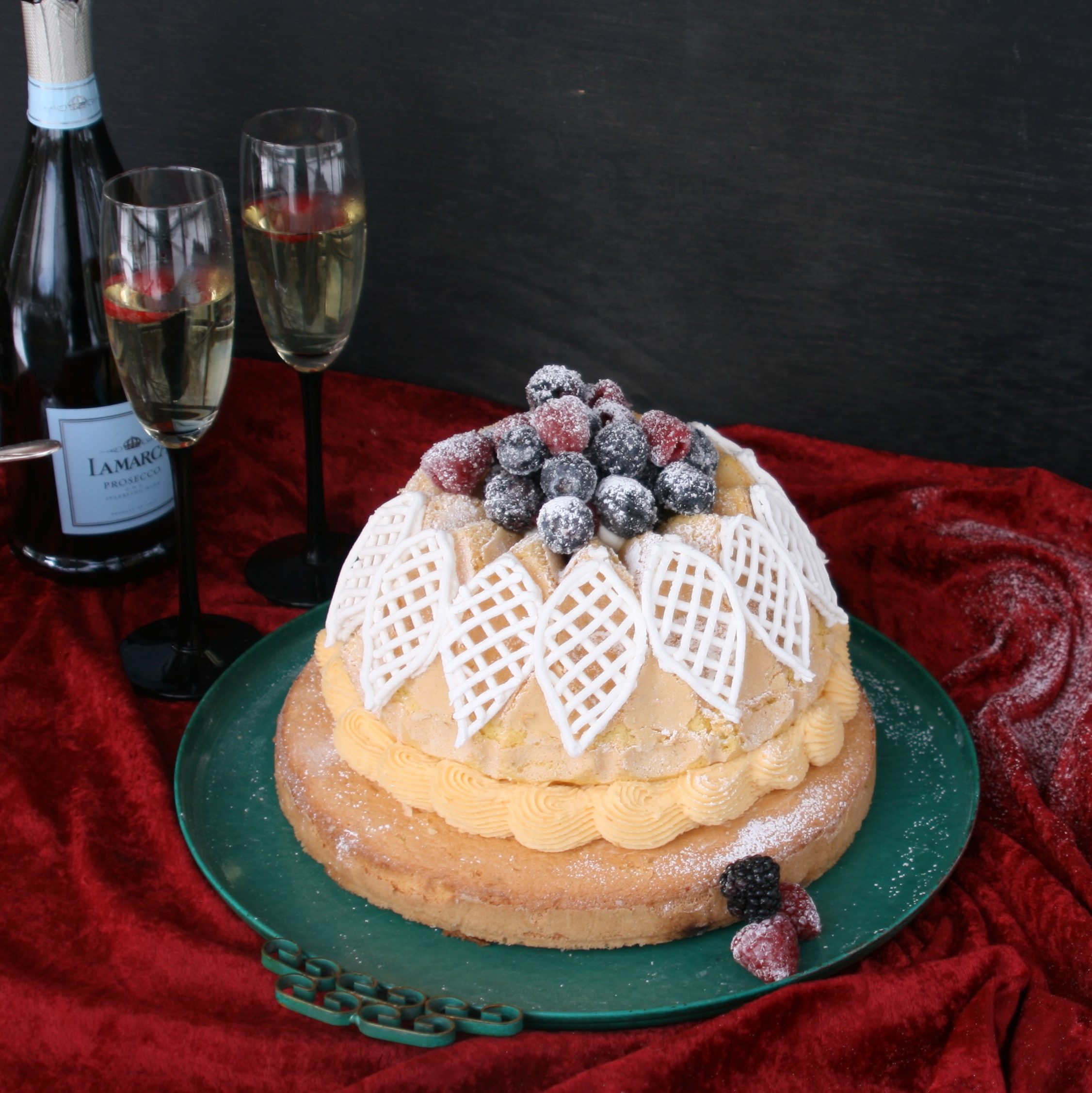
My cake is flavored with grapefruit and lime zest and filled with grapefruit-flavored German buttercream. I filled the center of the fluted cake with mascarpone whipped cream scented with Champagne and topped with sugared berries. I decorated the outside with royal icing latticework. The cake was light and spongy with a dry, tender crumb. The buttercream and whipped cream offset the lack of fat in the cake, so the overall profile was light and pleasant without being too sweet or overly filling.
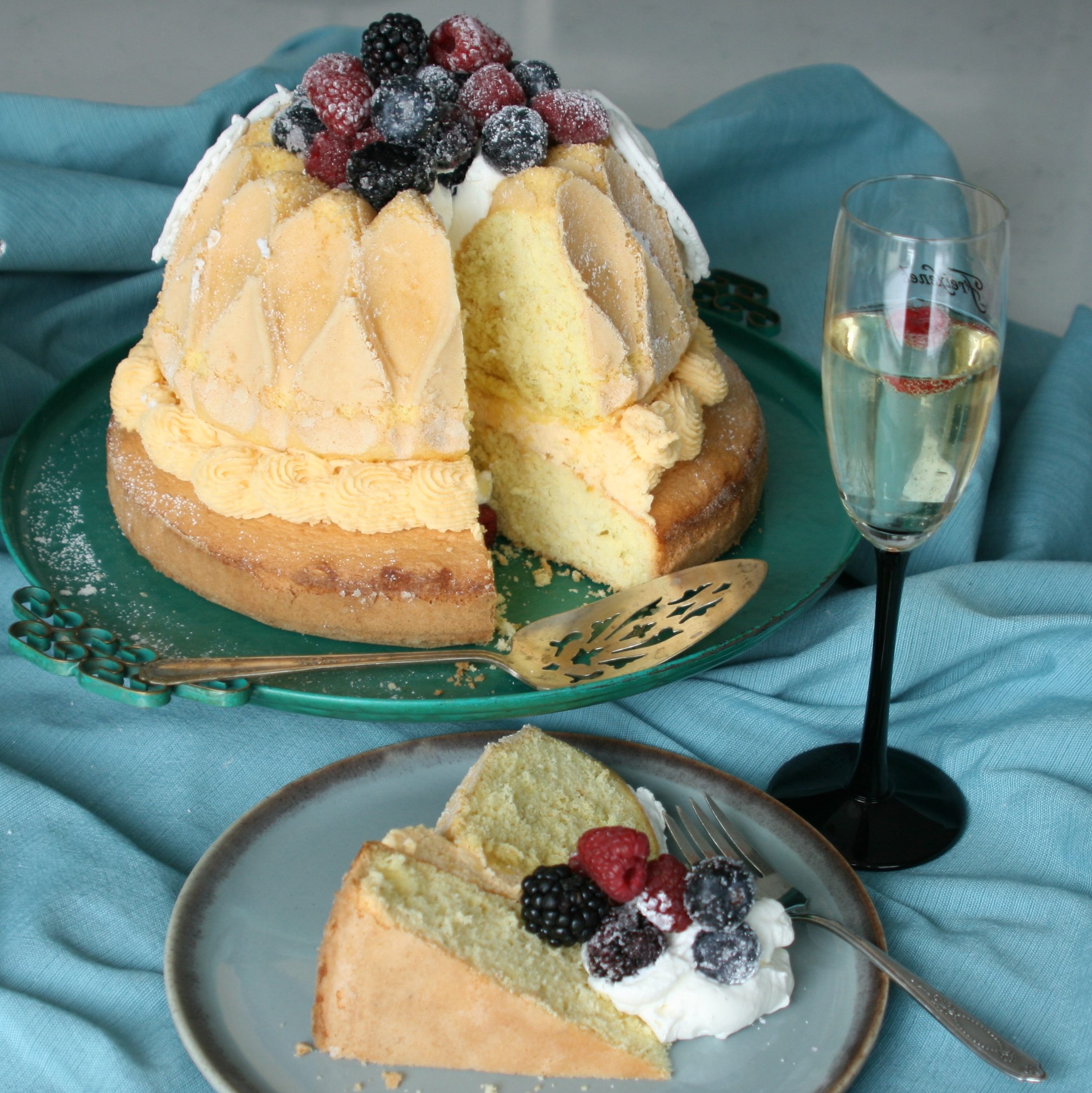
As with any fatless sponge, Savoy cake will dry out pretty quickly, so it’s best eaten the same day it’s made. If kept in an airtight container, it should be good for two or three days. After that, as many recipes for Savoy cake will tell you, any leftovers can be used to make a trifle or tipsy parson cake.
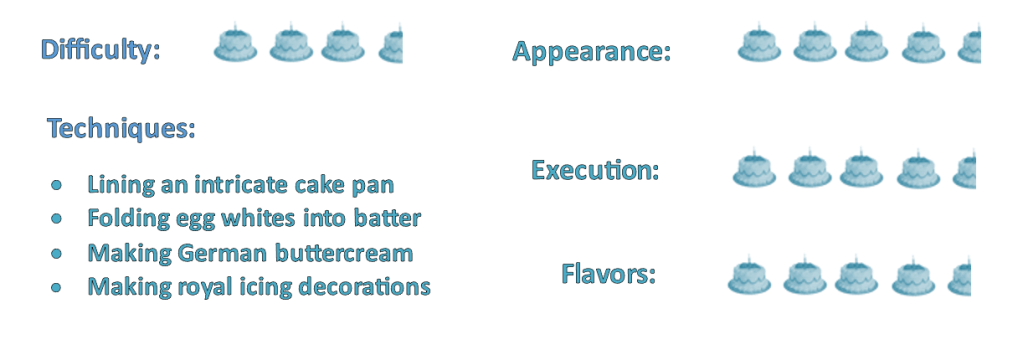
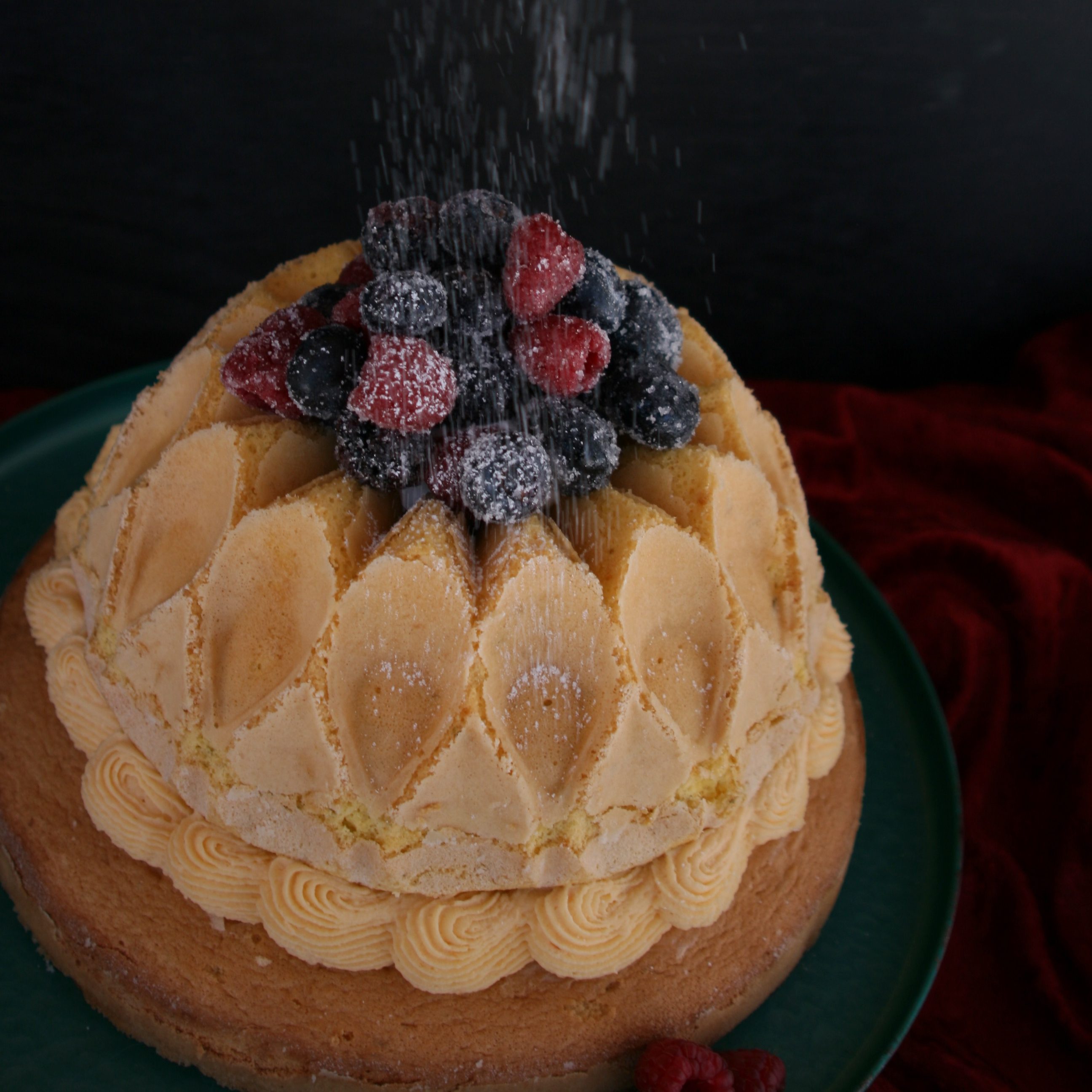
NOTE: If you wish to make a cake with a plinth, as I did, you will need to make the recipe for the cake (below) twice. I do not recommend doubling the recipe, as it would be too difficult to fold in the egg whites completely. For the top cake, I used a 10-cup Bundt pan. For the bottom cake, I used a 10-inch round springform pan. You could also use a 9-inch round springform pan.
Grapefruit & Lime Savoy Cake with Champagne Whipped Cream & Berries
- Cake recipe adapted from VelveteenRabbit.co.uk
- Credit for grapefruit pastry cream: Sanford D’Amato (published in the Milwaukee Journal-Sentinel, April 7, 2013)
- German buttercream recipe adapted from SugarSpunRun.com
- Credit for sugared berries: EmilyLaurae.com
For the Cake*:
- Lining paste + ¼ c. caster sugar
- 2/3 c. cornstarch
- 2/3 c. all-purpose flour
- Pinch of salt
- 6 eggs, separated
- ¼ t. cream of tartar
- 1 1/3 c. powdered sugar
- 4 t. grapefruit zest (from 1-2 grapefruits)
- 2 t. lime zest (about 1 lime)
Directions
- Preheat oven to 400°F. Brush the inside of a 10-cup Bundt pan with lining paste. Make sure to get into all the nooks and crannies. Dust with caster sugar and refrigerate until ready to use.
- Sift flour and cornstarch together with the salt and set aside.
- Place egg whites and cream of tartar in the bowl of a stand mixer. Whisk on high speed until stiff peaks form. Set aside.
- In a clean bowl, whisk the egg yolks and powdered sugar together on high until thickened and pale in color and ribbons form when the whisk is lifted from the bowl, about 10 minutes.
- Combine grapefruit and lime zest with flour mixture and gently fold one third of the dry ingredients into the egg yolk mixture by hand, followed by one third of the egg whites. Repeat twice more until all ingredients are thoroughly combined.
- Slowly pour the batter evenly into the prepared pan and place in the center of the oven for 5 minutes. Reduce temperature to 285°F and bake for another 30-35 minutes until well risen, golden, and a skewer inserted midway between the side and center of the pan comes out clean. Do NOT open oven during baking time.
- Leave in pan for 5 minutes, then carefully unmold onto a wire rack to cool completely.
- NOTE: If you plan to make a plain round cake for the base, brush the inside of a 9- or 10-inch springform pan with lining paste, then line the bottom of the pan with parchment paper. Brush the paper with lining paste and dust the inside of the pan with sugar. Then repeat the above recipe just like for the Bundt cake.
For the German buttercream:
- 2-4 ruby red grapefruits
- ½ c. granulated sugar, divided
- 2 c. whole milk
- Pinch of kosher salt
- 4 egg yolks
- ¼ c. cornstarch, sifted
- 1 c. butter (room temp.)
- ½ c. powdered sugar
Directions
- Zest two grapefruits (should yield 1 tablespoon zest), then cut them in half and squeeze them to extract the juice. (You’ll need 1½ cups juice.) Strain the juice through a medium strainer.
- In a small saucepan, mix juice and zest together and simmer the mixture on the stove for about 25 minutes until it’s reduced to 6 tablespoons of liquid.
- To make the pastry cream: In a medium, noncorrosive pan, combine ¼ cup granulated sugar with milk and salt and bring to a boil.
- In the bowl of a mixer fitted with a whisk attachment, whip egg yolks with remaining ¼ cup granulated sugar until pale in color. Whisk in the sifted cornstarch until smooth. Continue whisking while slowly pouring in the hot milk and sugar mixture.
- Return mixture to pan and whisk by hand while bringing the pastry cream to a boil, making sure the mixture doesn’t stick to the bottom of the pan. Let boil for 30 seconds, whisking continuously, then transfer to a clean bowl.
- Whisk in the grapefruit reduction. Cover surface with plastic wrap to prevent a skin from forming and cool to room temperature. When ready to use, whisk until smooth. [NOTE: The pastry cream can be made a day in advance and stored in an airtight container in the refrigerator overnight. Before making the buttercream, bring both the butter and pastry cream to room temperature.]
- To make the buttercream: First, make sure the pastry cream and butter are the same temperature. Weigh out 16 ounces of pastry cream and set aside. (Reserve the rest for another purpose.)
- Place the softened butter in the bowl of a stand mixer fitted with a whisk attachment and beat the butter on high speed until fluffy and lightened in color (3-5 minutes).
- Reduce mixer speed to medium and begin to gradually add pastry cream, one spoonful at a time (approx. 1-2 tablespoons), allowing the first spoonful to be completely incorporated before adding the next.
- Once all pastry cream has been added, add powdered sugar and slowly increase mixer speed to medium-high, beating until you have a fluffy frosting. [NOTE: If the buttercream seems to split, use a hairdryer set on hot and point it at the bowl while beating the frosting. Heating up the bowl should bring the elements back together again.]
For the sugared berries:
- ½ c. water
- ½ c. sugar
- 1 c. fresh berries (blueberries, blackberries, raspberries)
Directions
- In a small saucepan, bring water and sugar to a simmer, stirring to make sure the sugar is completely dissolved. Remove from heat and let cool for 15 minutes.
- Add berries to the saucepan and swirl them in the sugar syrup until completely coated. Let sit for 10-15 minutes.
- Remove berries from syrup and allow to dry on a paper towel for about an hour. (Reserve syrup for another use.)
- Transfer berries to a shallow bowl and sprinkle with sugar. Swirl or toss lightly to coat berries with sugar.
For Champagne whipped cream:
- ½ c. mascarpone cheese
- ¼ c. powdered sugar
- 1 c. whipping cream
- 4-6 T. Champagne (or prosecco), to taste
Directions
- Using a mixer fitted with a whisk attachment, whip mascarpone and powdered sugar together until light and fluffy.
- Add whipping cream and whisk until soft peaks form.
- With mixer on low, add Champagne, 1 tablespoon at a time, until you are satisfied with the flavor. Increase mixer speed to high for a few seconds until stiff peaks form.
For the royal icing decorations (optional):
- 2 egg whites
- 2 2/3 c. powdered sugar, sifted and divided in half
Directions
- In a heat-proof mixing bowl, whisk the egg whites with half of the powdered sugar until the sugar is dissolved. Place the bowl over a pan of simmering hot water over low heat. (The bottom of the bowl should be higher than the surface of the water.) Whisk the egg white and powdered sugar mixture constantly until it reaches 160°F. This will cook the egg whites enough so they are safe to eat.
- When the mixture has reached 160°F, remove the bowl from the pan and, using an electric mixer, beat the egg white mixture on medium speed while adding the remaining 1 1/3 cup of powdered sugar, a spoonful at a time. When all the sugar is incorporated, beat on high speed until the icing holds stiff peaks when the beaters are lifted out of the bowl. (If needed, add more powdered sugar, a tablespoon at a time.) Place a clean, damp towel over the bowl of icing to prevent it from drying out until you’re ready to use it.
- Fill a piping bag fit with a small round tip (or a freezer bag with a small hole cut from a corner) with royal icing. Twist the top closed, and tie it tightly with a string or wire twist-tie to keep the icing from squeezing out the top.
- Use the Bundt pan that you made the cake in to create a pattern for the decorations. On a sheet of parchment or waxed paper, pipe lattice decorations that will fit onto the Bundt cake. Leave to dry until you can peel them off the paper. Use more of the royal icing to adhere the hardened decorations to the cake.
- NOTE: The royal icing decorations can be made a day or two in advance. To store the leftover icing, keep it in the piping bag and seal it in an airtight container. When ready to use it to adhere the decorations, simply poke the hole of the piping bag with a toothpick to loosen any hardened icing before piping.
To assemble the cake:
- Place the round cake on a platter. Fill a piping bag fitted with a replaceable tip with the buttercream.
- Using a 1/2-inch plain round tip, pipe a circle of buttercream the same diameter as the Bundt cake in the center of the base cake. Fill in the circle with buttercream. Place the Bundt cake on top of the buttercream.
- Replace the tip on the piping bag with a 1/2-inch star tip. Pipe a decorative shell border around the edge of the buttercream.
- When ready to serve, fill center of Bundt cake with Champagne whipped cream and top with sugared berries. If desired, decorate cake with royal icing decorations. Serve immediately.
*The cake recipe is for one 10-cup Bundt pan or one 9- or 10-inch springform pan. To make both, as seen in the pictures shown here, the recipe must be made twice. I don’t recommend doubling the recipe, as it would be too difficult to fold in the egg whites completely.
Discover more from Here's the Dish
Subscribe to get the latest posts sent to your email.

It was delicious! Very light and tender, and I loved the citrus flavor!
LikeLike
It was delicious! Very light and tender, and I loved the citrus flavor!
LikeLike