
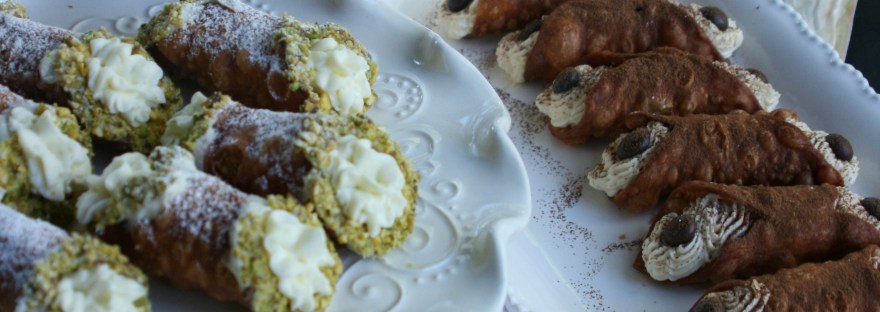
Follow the long, storied history of cannoli, and you will travel from Arabic harems to Roman Catholic convents, all within the island of Sicily, just off the “toe” of Italy’s “boot.” Since their creation sometime during the Middle Ages, cannoli have been hailed as symbols of fertility and used in religious festivals — sometimes simultaneously!
Back in the 9th and 10th centuries, Sicily was ruled by the Saracens, an ancient Arabic people from North Africa. They introduced sugarcane, as well as almonds, pistachios, candied fruits, and cinnamon to the region. Legend has it that the women living in a harem in Caltanissetta (a name derived from an Arabic word meaning castle of women) would compete with each other by making elaborate sweets for their emir. The cannolo, with its cylindrical shape and creamy filling, was purported to be a tribute to his “manhood.”
Fast forward a millennium or so, and Arab rule ended on the island in 1086, giving rise to the Norman Empire and the spread of Catholicism. Many Arabs in Sicily converted to Christianity, and perhaps some of the emir’s concubines or their daughters took religious vows, bringing with them to the convent the recipe for cannoli. However it happened, nuns subsequently became the guardians of cannoli, handing down the recipe from one generation to the next. They made cannoli for religious festivals, specifically Carnevale (a.k.a. Mardi Gras), a pre-Lenten celebration marked by feasting and debauchery.
In the Middle Ages, it seems, erogenous foods were often associated with fertility and considered to foster a connection with the divine. Cannoli aren’t the only suggestive pastries affiliated with convents and religious feasts. Minni di Sant’Agata are little cakes shaped like breasts typically served during the Festival of St. Agatha (Feb. 3-5), who was tortured for her faith by having her breasts cut off with pincers in 251 AD. Fedde del Cancelliere, or “chancellor’s bottoms,” were created, apparently, as an homage to Matteo d’Ajello, the grand chancellor of Sicily who founded a monastery there in 1171. Originally made in the shape of buttocks, these marzipan and pistachio cakes filled with blancmange cream and apricot jam were eventually “reformed” to take the shape of rounded shells.
Convents and monasteries of the time were known for their “dolceria,” or sweet shops, where desserts and pastries were sold as a source of income to keep the religious orders running and their buildings from crumbling. With rich endowments from noble families, convents could afford expensive ingredients that weren’t available to mere peasants. Pastry-making also gave the nuns something to do with their hands — when they weren’t praying, of course. In Palermo alone, 21 of these conventual confectioneries were registered in 1700.
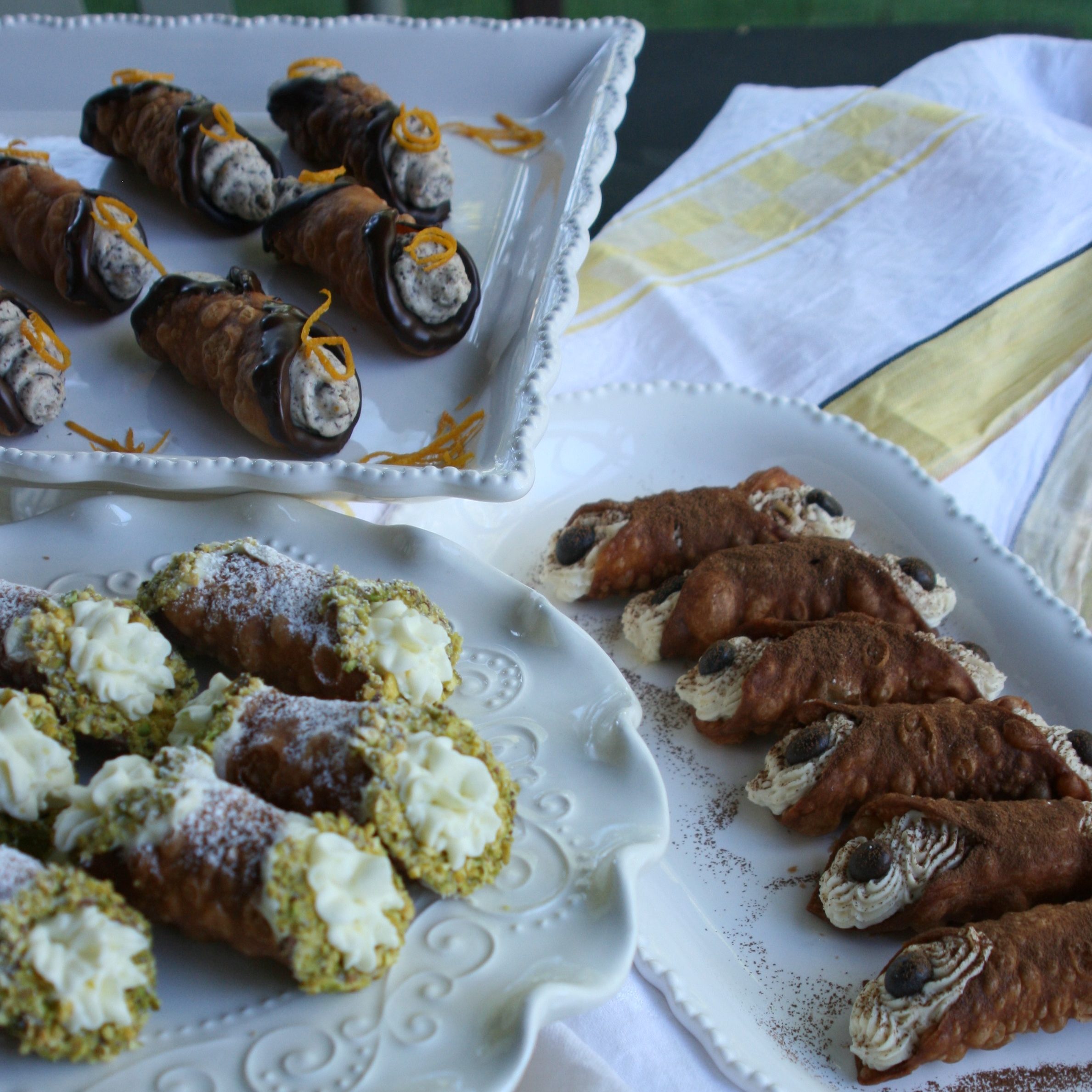
Unlike some of the pastries these dolceria were known for, like the now nearly-extinct Trionfo di Gola, or “triumph of gluttony,” cannoli have withstood the test of time and survived, nay thrived — traveling to Italian bakeries and restaurants all over the world. While traditionally cannoli were filled with sweetened sheep’s milk ricotta and garnished with candied fruit, pistachios or cinnamon, modern varieties may use mascarpone or whipped cream for a creamier texture. Fillings and flavorings can range from chocolate to coffee to caramel and even matcha — limited only by one’s imagination.
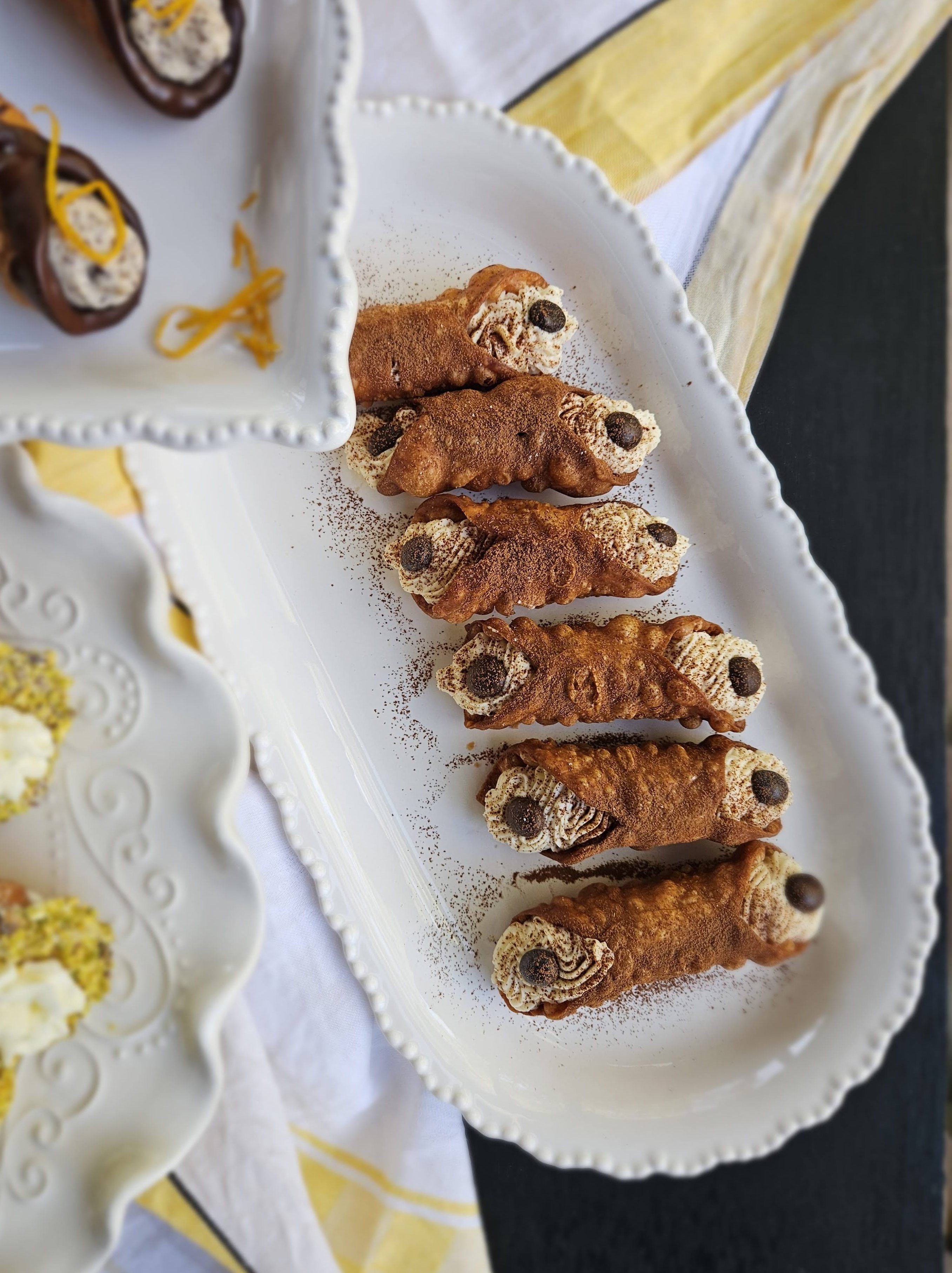
Cannoli are characterized by their crisp outer shell, which is achieved by rolling the dough very thin and deep frying to obtain a dark brown color and a bubbly outer texture. Paul Hollywood specifies that the shell must be a “beautiful golden brown, and it must have bubbles.” The bubbles are created by liquid in the dough evaporating when it hits the hot fat. To that end, recipes usually include a little vinegar and/or Marsala wine, which also lends a slight sweetness to the delicate pastry.
I borrowed Sophie’s recipe for my cannoli shells — she got high marks for her cannoli on this episode of Bake Off. She adds both Marsala wine and a teaspoon of vinegar. While lard is traditionally used in the dough, Sophie opts for vegetable shortening, which is more readily available and vegetarian-friendly.
While many recipes call for rolling the dough through a pasta machine, I was able to achieve a thin, crispy shell with just a rolling pin and some elbow grease. Stainless steel cannoli forms are required, though, to achieve the cannoli’s signature tubular shape. Fortunately, they are available fairly inexpensively online or in gourmet kitchen stores.
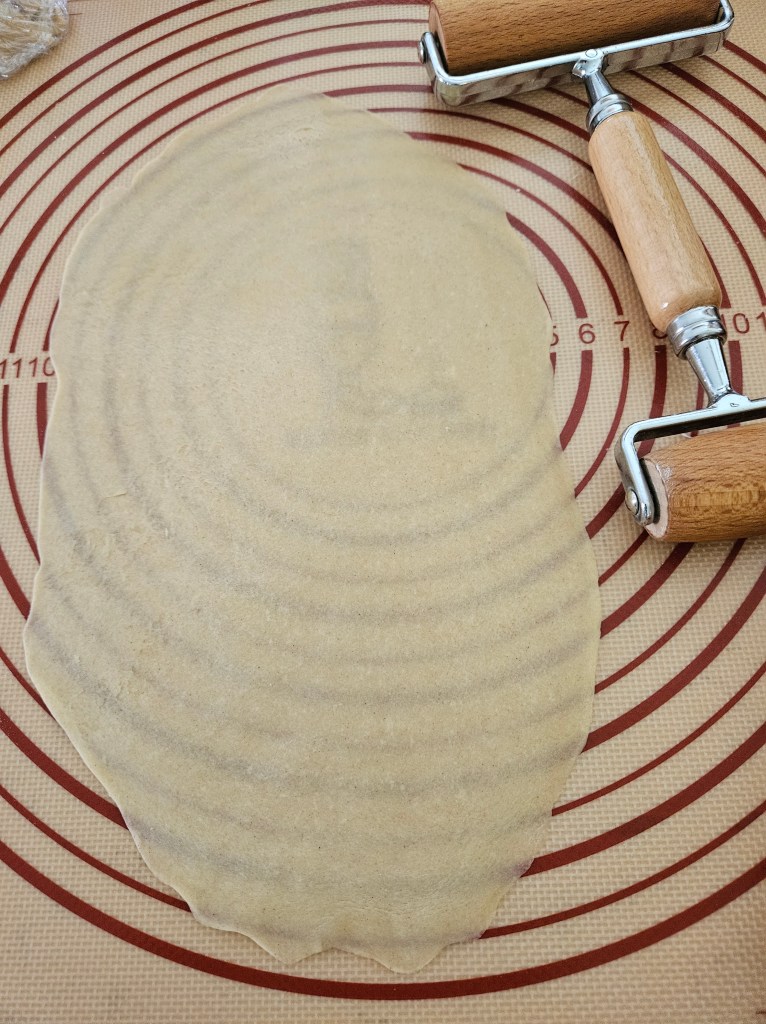
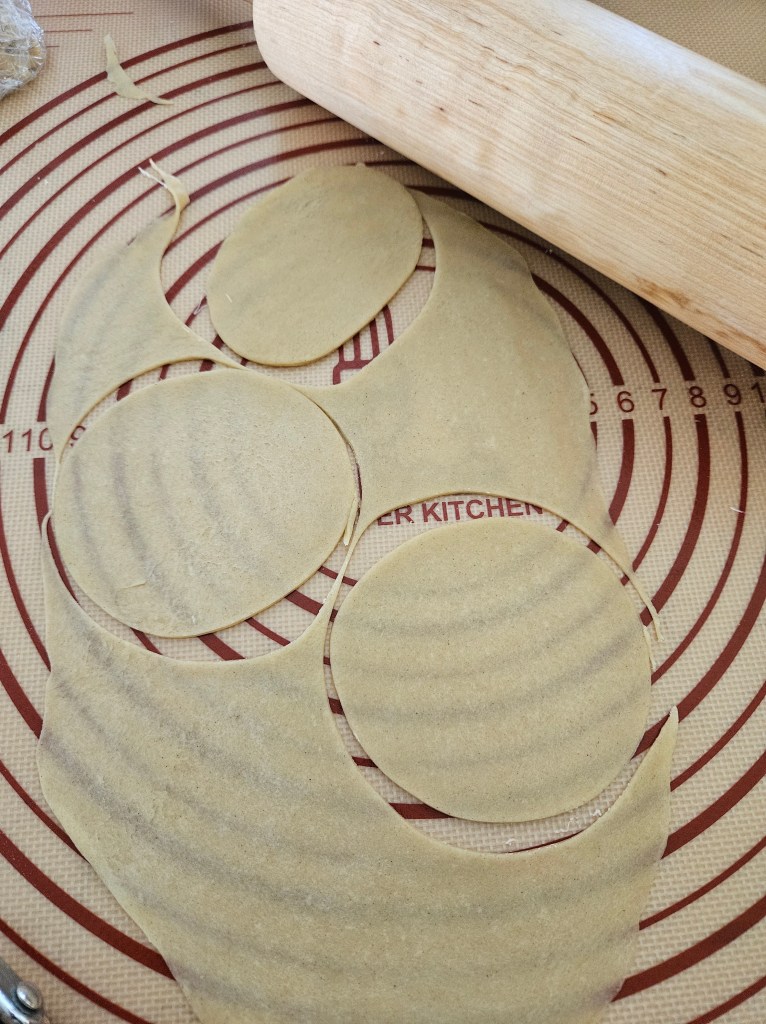
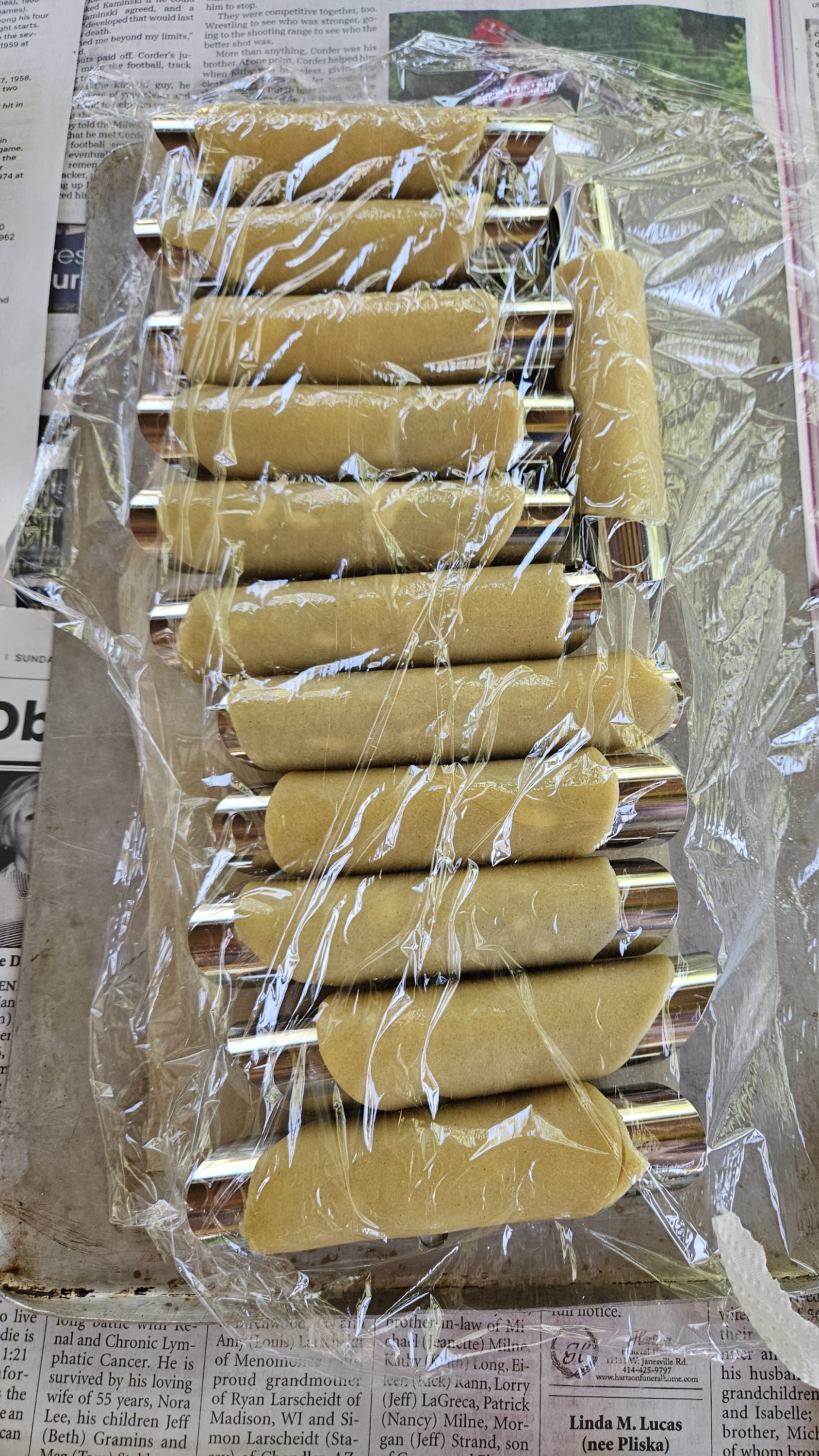
The tricky part about working with cannoli dough is that, while it’s very stretchy, it also bounces back after you’ve rolled it out and cut it. So keep those cannoli tubes handy, and as soon as you cut the dough into circles, wrap them around the tubes. I found I could even stretch the dough a bit more once it was on the tube. Also, seal it with a dab of egg white as soon as you roll it, but add a little more egg white right before you put the tube in the hot oil. The first few unfurled from the tube shortly after I put them in the fryer. Fortunately, the recipe makes enough dough for extra shells, so I still had enough for the requisite 18.
For my fillings, I chose limoncello, tiramisu, and chocolate-orange. Although Bake Off judges Paul and Prue Leith expressed doubt about Sophie’s use of mascarpone in her fillings, I discovered in the recipes of other contestants (Steven, Kate, Yan, and Stacey) posted on TheGreatBritishBakeOff.co.uk that they all used a mixture of ricotta and mascarpone. So I had no qualms about doing so myself.
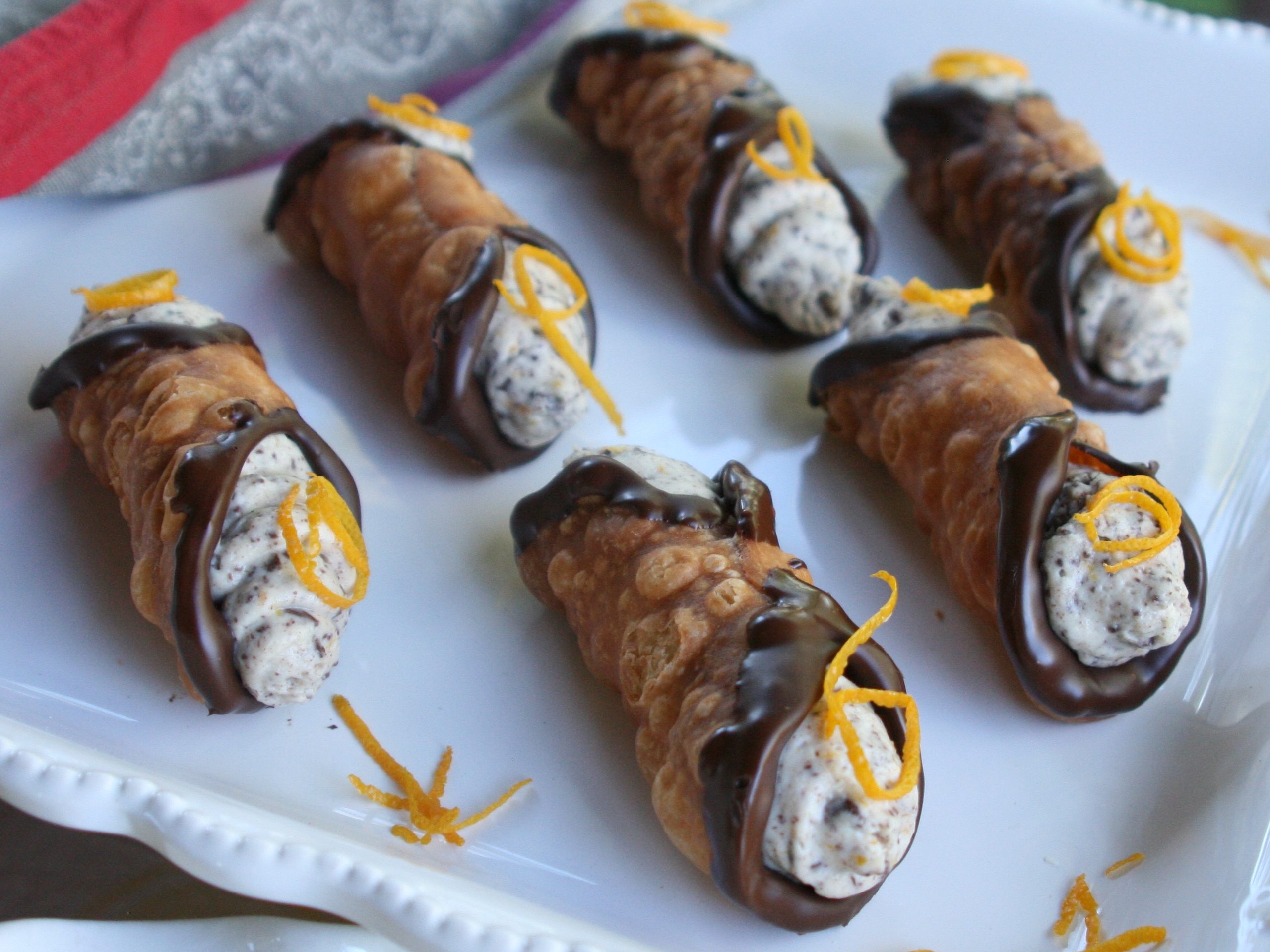
The key to serving crisp cannoli with a creamy center is to fill them right before you serve them. The shells will keep in an airtight container for up to a week. The filling can be stored in the refrigerator for several days. Some people even say the fillings are better after being refrigerated overnight, giving the flavors time to meld and deepen.
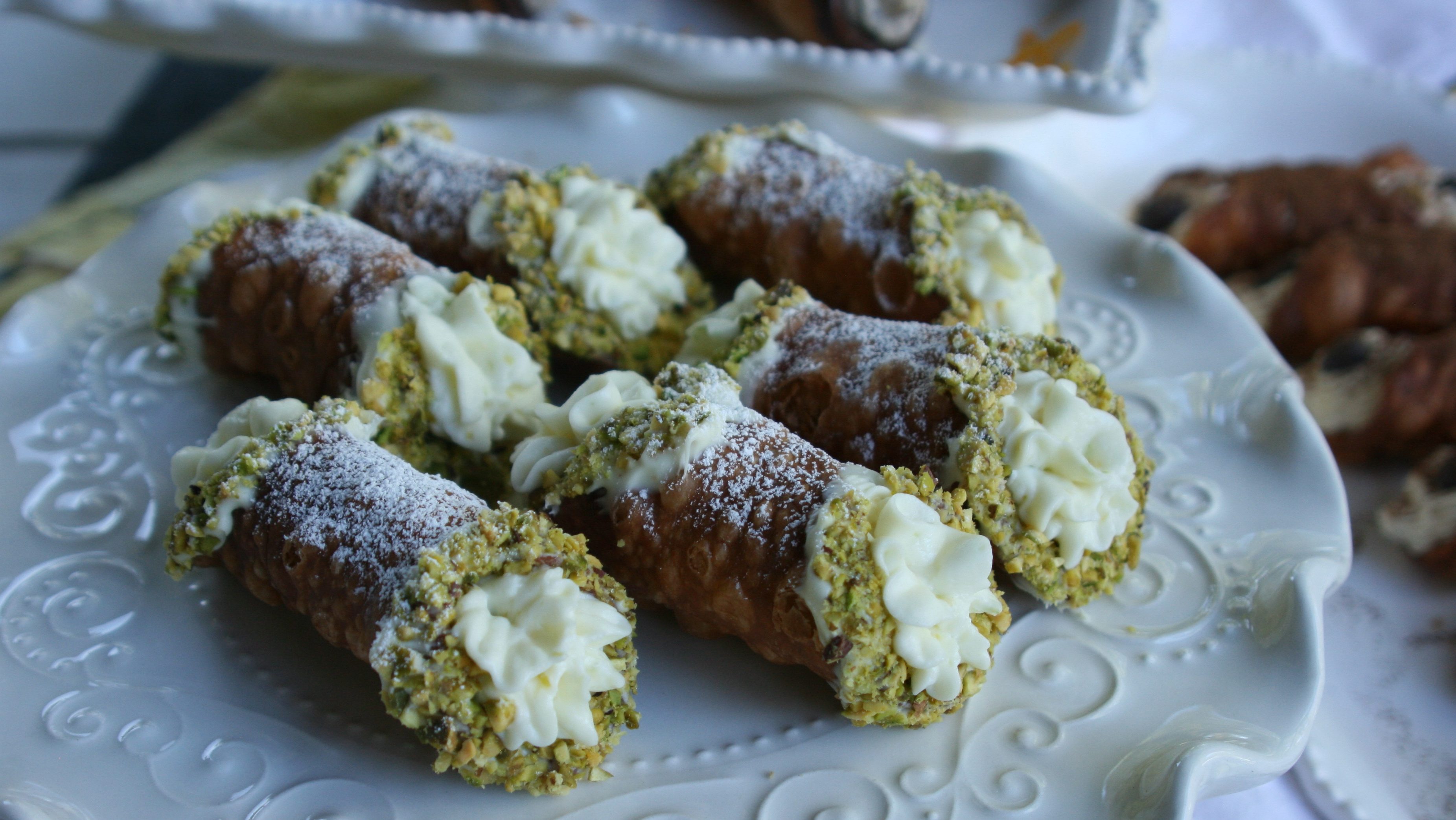
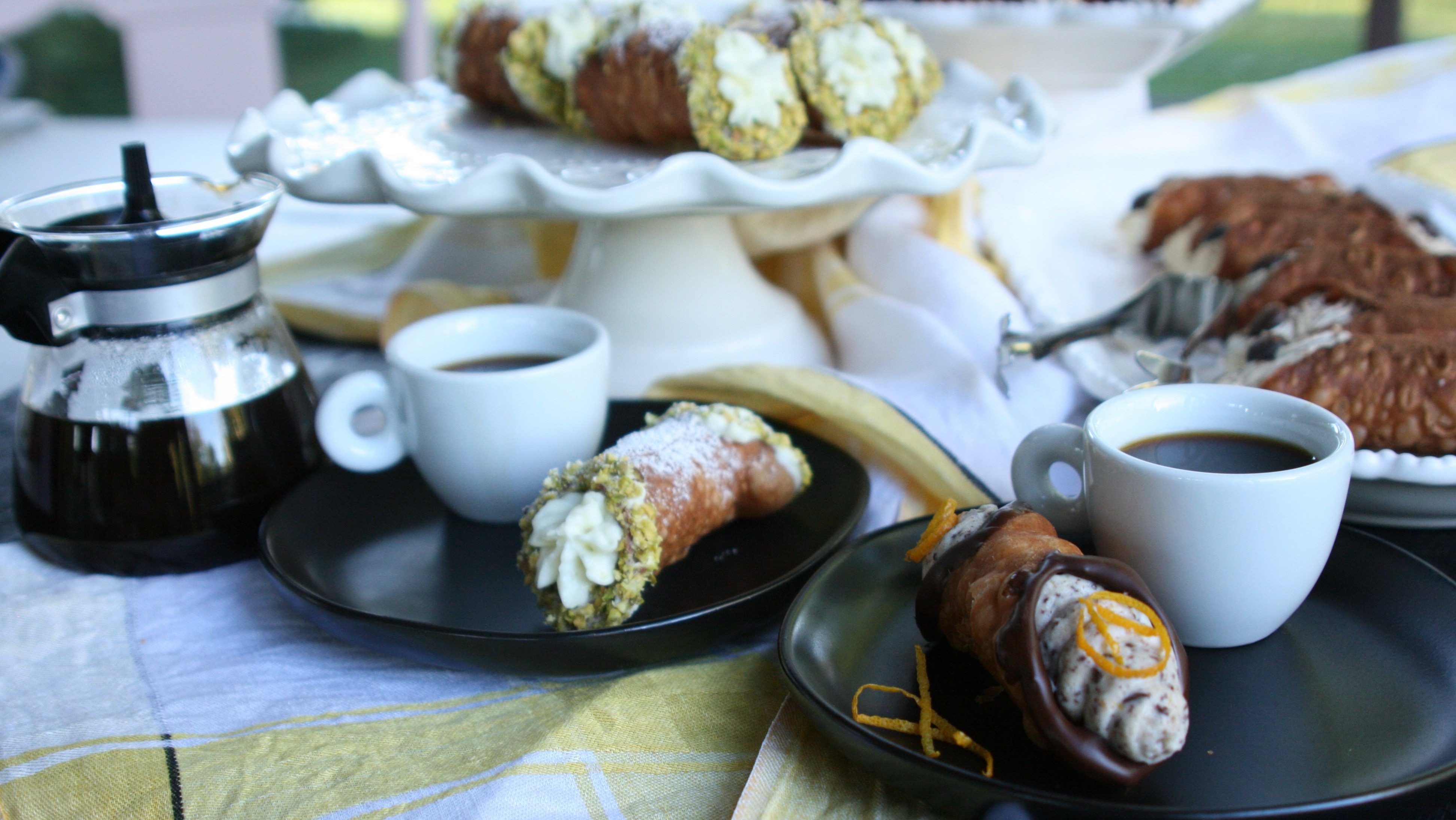
My cannoli were a big hit with the neighbors, but especially with my mother, who had never had a cannolo before. I took the cream and shells with me when I went to visit her the week after making them. She ate two every night. Her favorite flavor was the limoncello, and she gave them her highest praise: “They’re better than ice cream!”
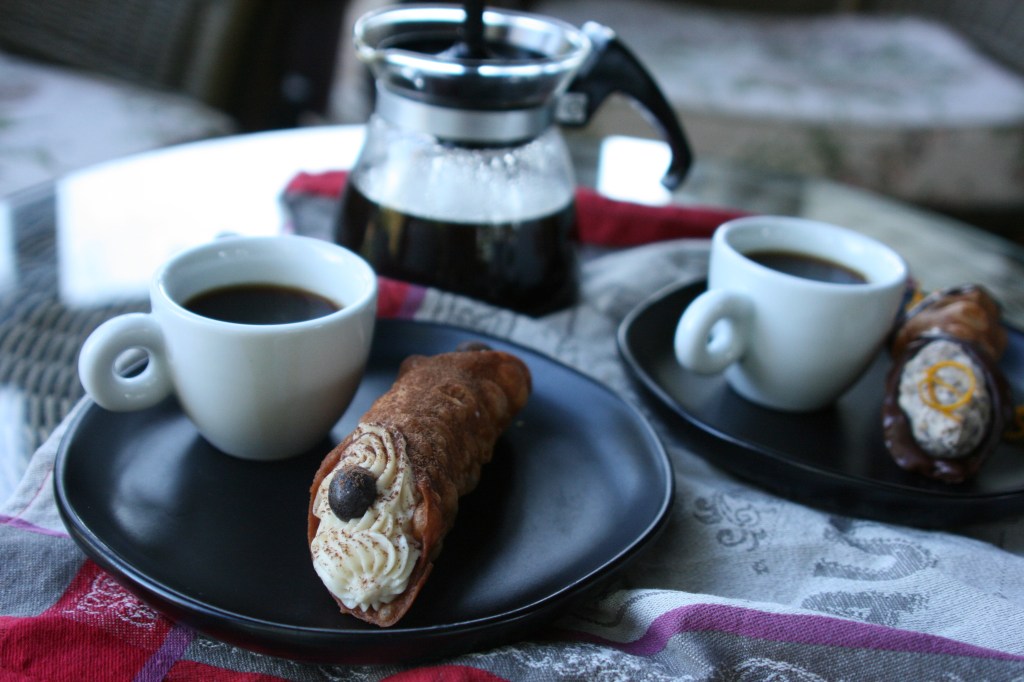
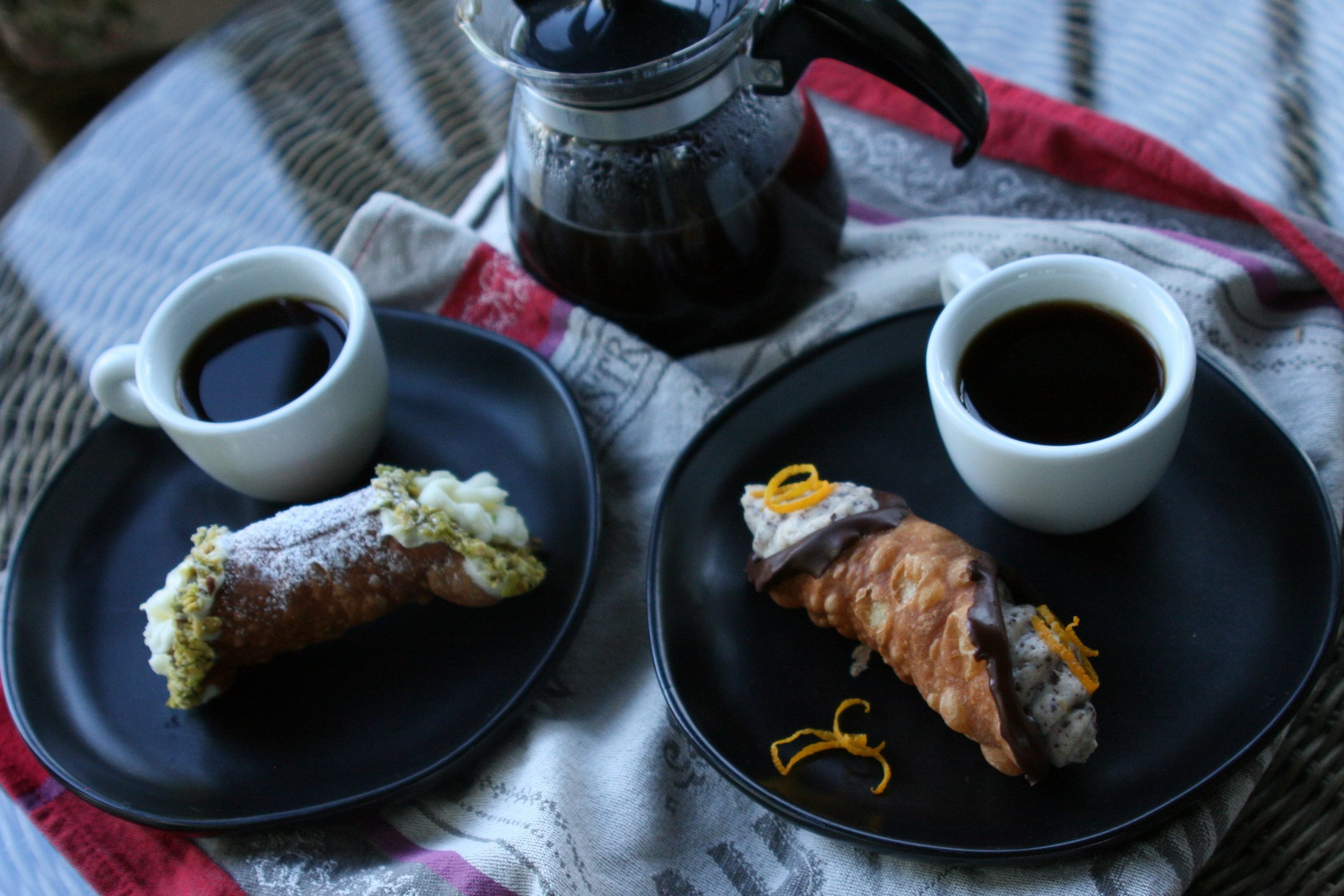
Cannoli With Three Fillings
For the shells:
- 2 c. all-purpose flour
- ¼ c. caster sugar
- ¼ t. cinnamon
- 2 T. vegetable shortening
- 2 large eggs
- 4 T. Marsala wine
- 1 t. white vinegar
- 2 quarts peanut or sunflower oil, for frying
Directions
- Unless you plan to make the shells in advance, begin by draining the ricotta for the fillings by following the directions in the footnote below.*
- To make the shells: First, separate one of the eggs and reserve the egg white for later. In a small bowl, combine the yolk with the other whole egg, Marsala wine, and vinegar and set aside.
- Sift the flour, sugar, and cinnamon into the bowl of a stand mixer fitted with the paddle attachment. Add the shortening and work it in with a pastry blender or the mixer on low speed until the mixture resembles fine crumbs. Make a well in the center and pour the egg mixture into the well. Mix on low speed until it forms a firm dough. (The dough should follow the paddle around the bowl, cleaning the sides of the bowl.)
- Turn the dough out onto a lightly floured surface and knead it for 8-10 minutes, until smooth and pliable. Wrap dough in plastic wrap and leave to rest for 30-60 minutes.
- Lightly whip the reserved egg white and set aside. (You will need a small, food-safe paintbrush for dabbing.)
- Divide the dough into six equal portions. Keep them covered while you work with one at a time. Flatten each portion and roll it out with a rolling pin until it is as thin as possible (about 1/16 inch thick — so thin you can almost read through it). Use a floured, 4-inch round cutter to cut each portion into four disks.
- As soon as you cut out a disk, wrap it around a cannolo tube and seal with a dab of the reserved egg white. Be careful not to get egg white on the tube or it will be hard to remove the shell. Cover the dough-wrapped tubes with plastic wrap to keep them from drying out. Repeat with remaining portions of dough until you have 24 disks. (If you don’t have 24 cannoli tubes, make the shells in batches.)
- Heat the oil in a deep-fat fryer to 350°F. Carefully lower one tube into the hot oil and fry for 1½ to 2 minutes, until crisp and golden brown. Use tongs to remove it from the oil and place it on a wire rack lined with paper towels to cool. When cool enough to handle, ease the tube out of the shell. This first one is your trial run; use it to test your method and make sure your oil is the right temperature.
- Cook the shells in batches of three, making sure the oil comes back up to temperature between each batch. Once they are all fried and cooled, store in airtight containers while you make your fillings. (Shells can be made two to three days in advance.)
For the chocolate-orange filling:
- 6 oz. ricotta, drained*
- 6 oz. mascarpone
- ¾ c. powdered sugar, divided
- ½ t. vanilla
- 2½ oz. shaved chocolate (dark or bittersweet)
- Zest of 1 orange
- ½ t. cinnamon (opt.)
- 1/3 c. heavy whipping cream
- 1 t. cornstarch
- 5 oz. dark chocolate, for dipping
Directions
- Using a wooden spoon or the paddle attachment of a stand mixer, mix the ricotta and mascarpone together until smooth and creamy. Measure out ¾ cup powdered sugar, then reserve 2 tablespoons, and add the rest to the ricotta mixture, as well as the vanilla, and mix well. Fold in the shaved chocolate and orange zest. Taste and add cinnamon, if desired.
- In a separate bowl, whip the cream, cornstarch, and reserved powdered sugar together until stiff peaks form. Fold gently into the ricotta mixture until just combined. Transfer to a piping bag fitted with a round attachment and refrigerate until ready to use.
- Melt dark chocolate over a pan of simmering water. Dip both ends of six cannoli shells in the chocolate. Leave on wax paper–lined cooling racks to set.
- Pipe ricotta mixture into the chocolate-dipped cannoli shells, filling from both ends to make sure they are completely filled.
For the tiramisu filling:
- ¾ t. instant espresso powder
- ½ c. heavy whipping cream, divided
- 6 oz. ricotta, drained*
- 6 oz. mascarpone
- 1 c. powdered sugar, divided
- 1½ T. Marsala wine
- 1½ t. cornstarch
- 12 chocolate-covered espresso beans
- Cocoa powder, for dusting
Directions
- Dissolve espresso powder in 1 tablespoon of the cream and set aside.
- Using a wooden spoon or the paddle attachment of a stand mixer, mix the ricotta and mascarpone together until smooth and creamy. Measure out 1 cup powdered sugar, reserve 3 tablespoons, and add the rest to the ricotta mixture, mixing well. Then add the Marsala wine and espresso mixture and mix in.
- In a separate bowl, whip the rest of the cream, cornstarch, and the reserved powdered sugar until stiff peaks form. Fold gently into the ricotta mixture until just combined. Transfer to a piping bag fitted with a star attachment and refrigerate until ready to use.
- Pipe ricotta mixture into six of the cannoli shells, filling from both ends to make sure they are completely filled. To garnish, place one espresso bean at each end of the cannoli and dust with cocoa powder.
For the limoncello filling:
- 6 oz. ricotta, drained*
- 6 oz. mascarpone
- ¾ c. + 2 T. powdered sugar, divided (plus extra for dusting)
- Zest of 1 lemon
- Zest of 1 lime
- 2-3 T. limoncello, to taste
- 1/3 c. heavy whipping cream
- 1 t. cornstarch
- 5 oz. white chocolate, for dipping
- ¼ c. chopped pistachios
Directions
- Using a wooden spoon or the paddle attachment of a stand mixer, mix the ricotta and mascarpone together until smooth. Add ¾ cup of the powdered sugar to the ricotta mixture and mix well. Add the citrus zest and limoncello, to taste.
- In a separate bowl, whip the cream, cornstarch, and 2 tablespoons powdered sugar until stiff peaks form. Fold gently into the ricotta mixture until just combined. Transfer to a piping bag fitted with an open star attachment and refrigerate until ready to use.
- Melt the white chocolate over a pan of simmering water. Remove from heat and dip both ends of six cannoli shells in the melted chocolate and then in the pistachios. Leave on waxed paper-lined cooling rack to set.
- Pipe ricotta mixture into the white chocolate–dipped cannoli shells, filling from both ends to make sure they are completely filled. Dust with powdered sugar.
*NOTE: To make all three fillings, start with 24 ounces of ricotta. It will lose about a third of its weight in liquid. To drain the ricotta, place a fine-mesh strainer over a bowl and line the strainer with cheesecloth or muslin. Place ricotta in the cloth and fold the ends of the cloth over the cheese. Set a small saucer on top, weighing it down with a heavy can or jar, and leave to drain for about an hour or refrigerate overnight. (If you do make all three fillings, you will have more than enough to fill 24 cannoli.)
Discover more from Here's the Dish
Subscribe to get the latest posts sent to your email.
