
Summer is the perfect time to make fougasse. My little container garden is blossoming with tomatoes, sweet peppers and herbs. I just have to step outside my back door to gather a harvest of rosemary, thyme and sage to mix in with this olive oil–scented dough.
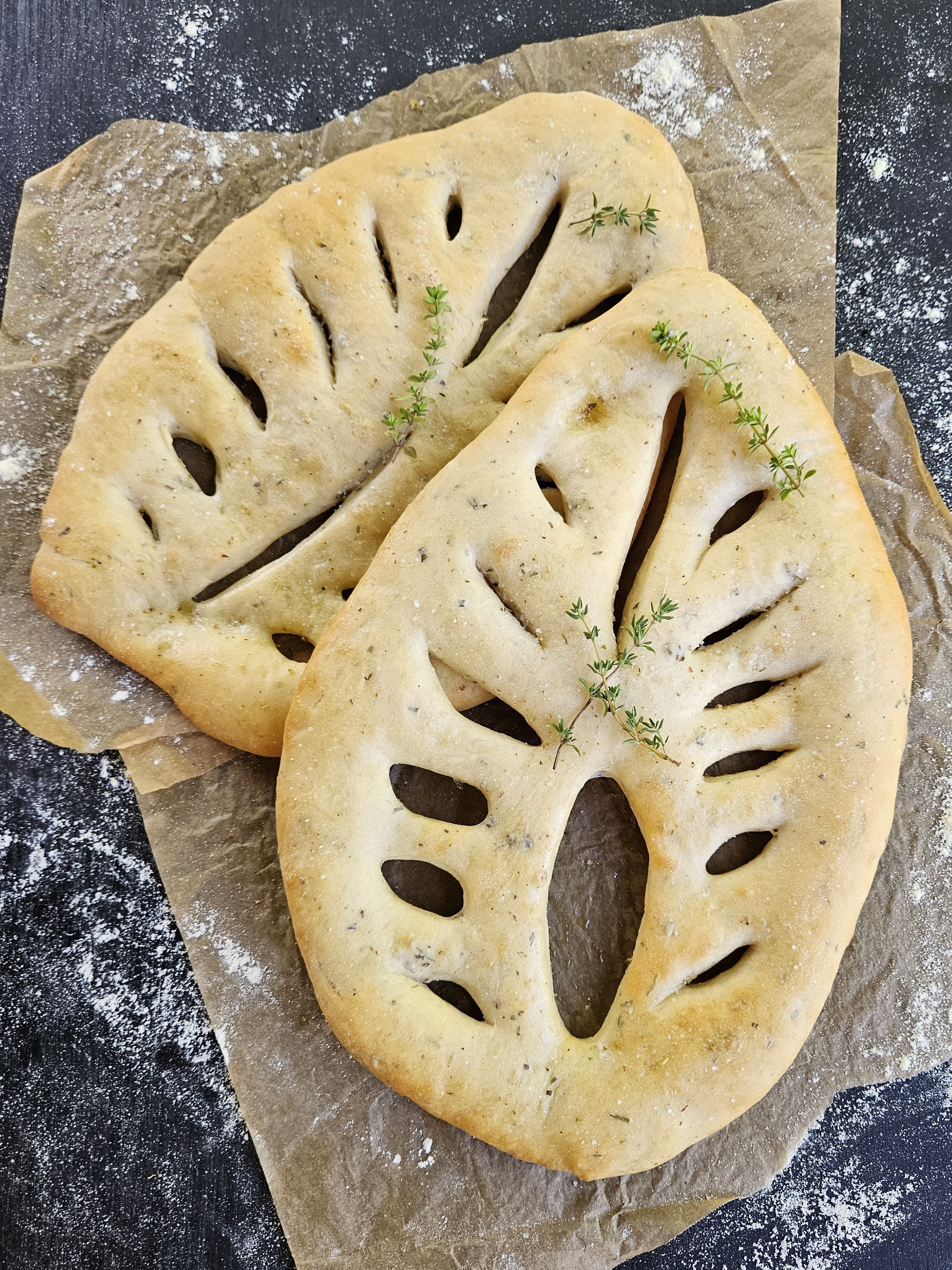
The French cousin of focaccia, fougasse is mostly associated with Provence in the southeast of France. The main difference between the two types of bread is that, while focaccia is often baked in a sheet pan and coated with oil, fougasse is formed into a leaf shape and scored with a knife to look like a leaf or a head of wheat and then baked on a stone or baking sheet. The result is a crustier loaf than the softer, moister focaccia. They both are derived from the ancient Roman panis focacius, or hearth bread, as they were originally baked on the floor of the hearth (the focus) to test the temperature of the oven.

Fougasse can be made sweet or savory, each region claiming its own specialty. The sweet variety may be enriched with eggs or butter and flavored with dried fruit or orange blossom water. The savory kind can be stuffed or topped (before baking) with olives, anchovies, sun-dried tomatoes, cheese or lardons.
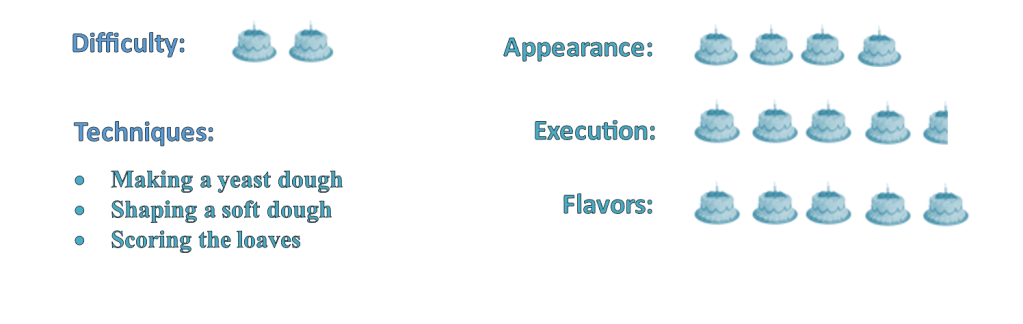
This fougasse, being a technical challenge, is made from Paul Hollywood’s recipe. His version is fairly simple — a basic yeast dough scented with olive oil and studded with fresh herbs, filling the kitchen with a heady, earthy aroma that makes your mouth water before it’s even out of the oven.

The recipe makes two loaves; each can easily be devoured by two people at a single meal. Fougasse pairs well with pasta, a green salad, or a charcuterie board and a nice glass of wine. If you’re fortunate enough to have some left the next day, it’s excellent accompanied by a fragrant dipping oil.
You can find Paul’s original recipe here, but I have adapted it for American bakers below.


Paul Hollywood’s Fougasse
(Adapted for American bakers)
Ingredients
- 3½ c. white bread flour, plus extra for dusting
- 2½ t. fine salt
- 2¼ t. (1 packet) instant yeast
- 2 T. olive oil, plus extra for greasing and drizzling
- 1½ c. warm water
- 2 t. chopped fresh rosemary
- 2 t. chopped fresh thyme
- 2 t. chopped fresh sage
- Fine semolina (or fine cornmeal), for dusting
- ½ t. dried oregano
- Sea salt flakes, crushed, to finish
Directions
- Grease a large plastic container with a little olive oil. Line two large baking sheets with parchment paper.
- Put the flour, salt and yeast into the bowl of a stand mixer fitted with a dough hook. (Put the yeast on the opposite side of the bowl as the salt.) Add the olive oil and three-fourths of the water. Begin mixing on low speed.
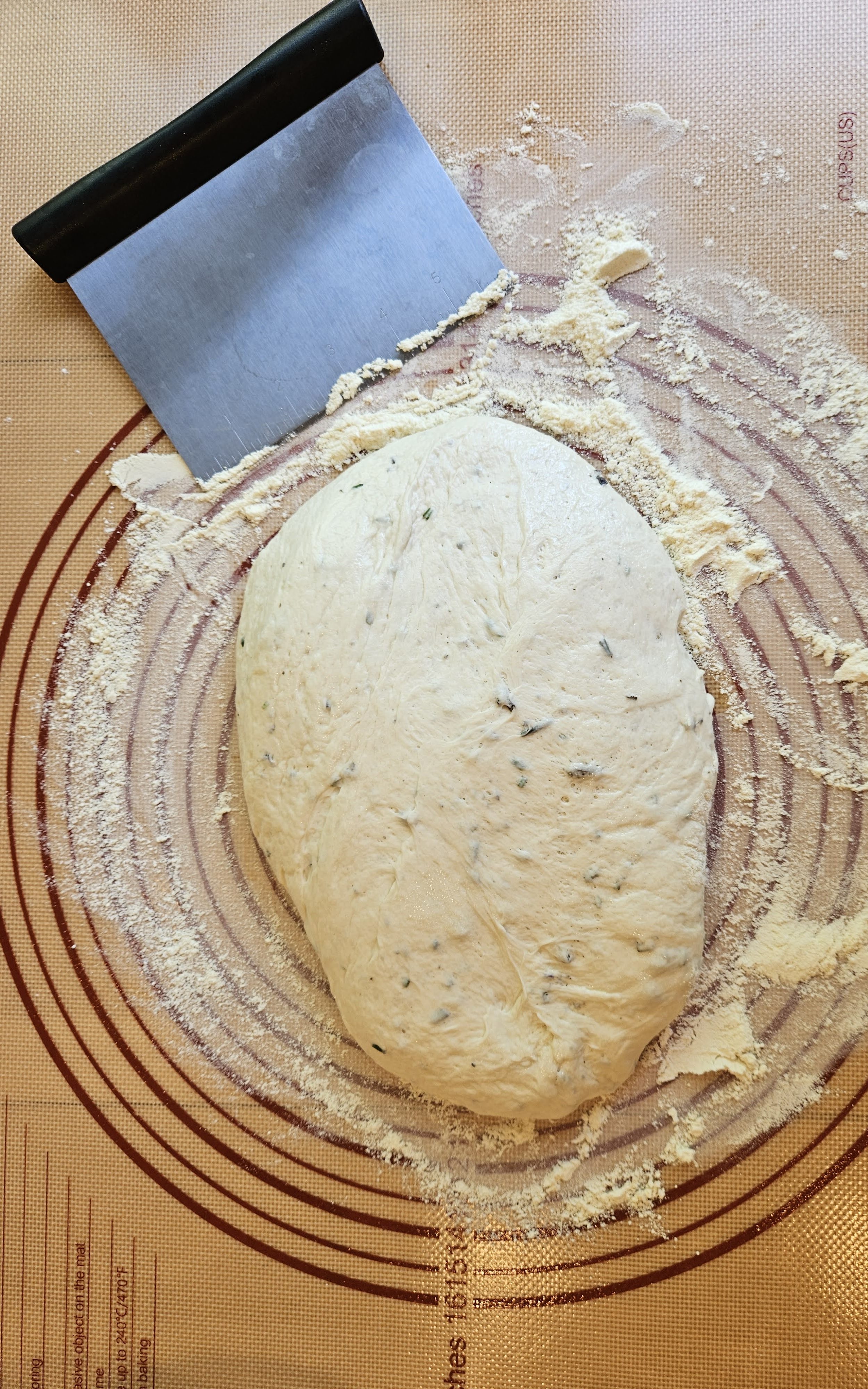
- As the dough starts to come together, add the remaining water very slowly, then mix for another 8 minutes on medium speed. Add the rosemary, sage and thyme, and mix for a minute more until the herbs are evenly distributed in the dough. When ready, the dough will be very elastic, and it should stretch as it falls from the bowl.
- Tip the dough into the oiled container. Cover and leave to rise until at least doubled in size — about an hour. The dough should be bouncy and shiny.
- Mix equal quantities of white flour and semolina (or fine cornmeal) together (about 1 tablespoon each), and use it to heavily dust the work surface. Carefully tip the dough out of the container. It will be quite loose and flowing. Cut the dough into two equal halves.
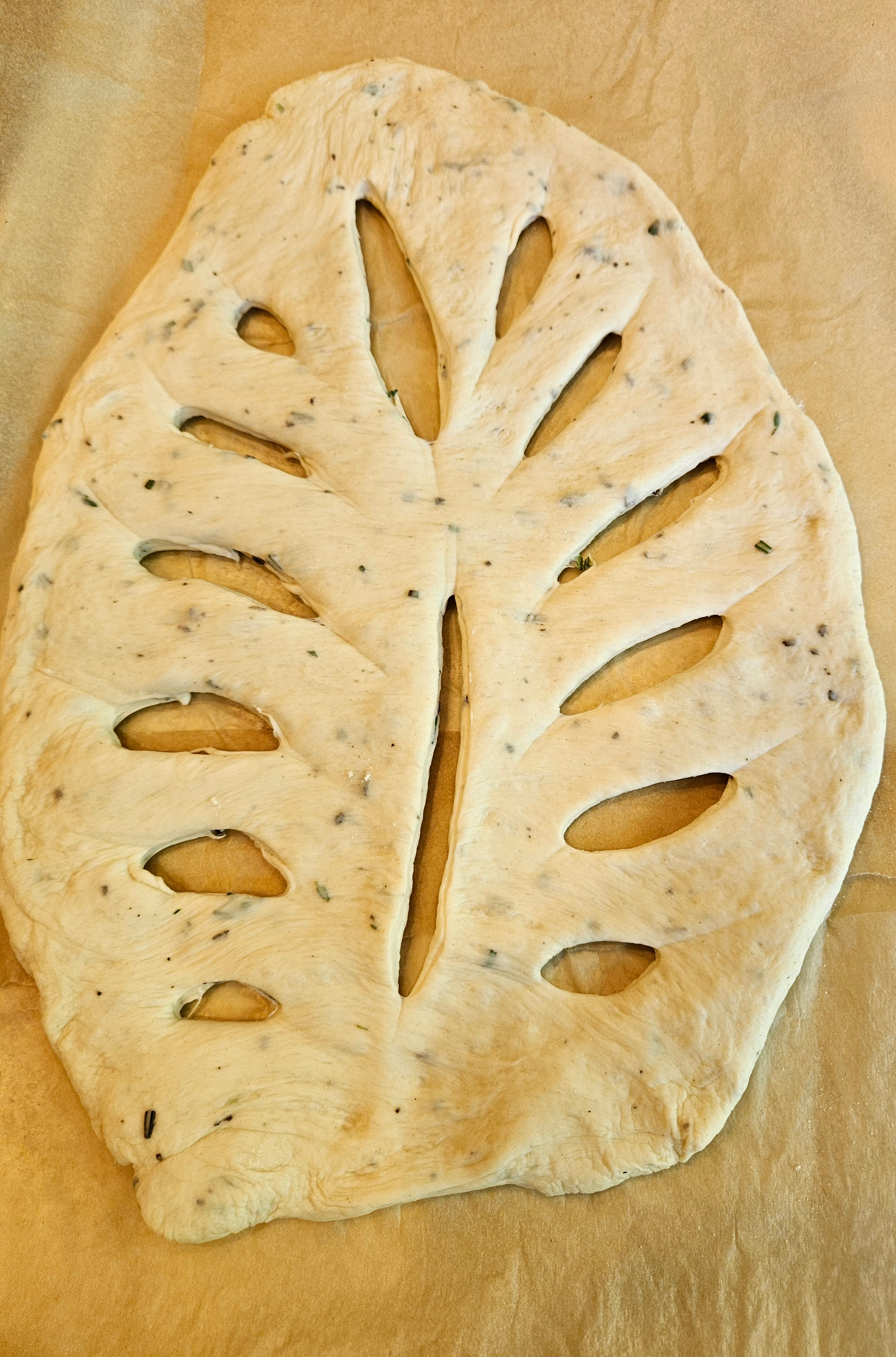
- Lift each half onto a prepared baking sheet, and use your hands to spread it out into a flat oval. Using a pizza cutter or knife, make two cuts in a row down the center of each oval, with a gap in between, stopping 1 inch from each end. Then make 12 diagonal cuts alongside the vertical cuts, six on each side, to form a leaf design. Stretch the dough out slightly to emphasize the holes.
- Place each baking sheet inside a large plastic bag (I used turkey-sized roaster bags.), and leave to prove in a warm place for 20 minutes. Preheat the oven to 425°F.
- Spray or drizzle a little olive oil over the top of the loaves and sprinkle with oregano. Bake for 15-20 minutes or until the fougasse sounds hollow when tapped on the base. Remove from oven and, while still hot, brush with more olive oil and sprinkle with sea salt.
Up next: Marjolaine
Discover more from Here's the Dish
Subscribe to get the latest posts sent to your email.
