Before molten pudding, a.k.a. molten lava cake, became a staple dessert of gourmet restaurants in the 1990s, before it went on to be called the “Big Mac of desserts” by food writer Mark Bittman of The New York Times in the early 2000s, there was, about 30 years earlier, a family-sized version of chocolate cake with a gooey center — the Tunnel of Fudge Cake.
This great-grandmother of molten lava cake was the runner-up in the 1966 Pillsbury Bake-Off®*. Invented by Ella Rita Helfrich of Houston, the Tunnel of Fudge cake became so popular that some credit it as saving the now-classic Bundt pan from extinction, and it still holds the distinction of being the most-requested recipe in Pillsbury history.
The fudgy Bundt cake with a melty, chocolatey core running through it was the darling of American housewives until Pillsbury discontinued one of its key ingredients: Double Dutch Fudge Buttercream Frosting Mix. Since then, home bakers have been trying to recreate the retro dessert with mixed results.

Fast forward a couple of decades and another trendy dessert is born, reminiscent of the Tunnel of Fudge cake but this time in a fun-size, individual format. French chef Michel Bras is credited with inventing the chocolate coulant (French for flowing) in 1981 after two years of research. He wanted to evoke the feeling of sipping on a mug of hot chocolate after a day of snow skiing, and he finally came up with the idea of baking a frozen ball of chocolate ganache in the center of a ramekin filled with chocolate cake batter. As the cake bakes, the ganache melts, resulting in a fully baked cake with a molten center that oozes out when stabbed with a spoon.
Six years later and a continent away, a young chef at the restaurant Lafayette in New York’s Drake Hotel, Jean-Georges Vongerichten — who would later become a world-renowned restaurateur — accidentally reinvented the molten lava cake by underbaking 500 cupcakes he was making for a private party, having forgotten to adjust the oven temperature for the number of cakes he was putting in at the same time. Horrified, the maître d’ came running to the kitchen exclaiming that the cakes were underbaked, but in the end, Chef Vongerichten received a standing ovation from the party guests! He named his unexpected success Chocolate Valrhona Cake, after the chocolate he used, and it was added to the restaurant’s dessert menu the following day.
Although Ella Quittner of Food52 does an excellent job comparing the two iterations as well as offering quite a few variations on the theme here, it’s no wonder that Vongerichten’s version became more popular. Without the multiple steps of making and freezing the ganache and making the cake batter separately, Vongerichten’s recipe simply involves melting butter and chocolate together, beating eggs and sugar to ribbon stage, then folding in the (cooled) melted chocolate and a little flour. By baking it in a hot oven for just a few minutes, the cake comes out cooked on the outside but underdone and runny in the middle.
When Vongerichten opened his restaurant JoJo in 1991 and featured Chocolate Valrhona Cake on the menu, molten lava cakes began to take off in restaurants all over New York. They reached chain status when, in 1998, Chili’s added them to its menu, and they have since become a feature at Disney World’s Epcot Center, Applebee’s and California Pizza Kitchen. Walmart even has a version in its frozen dessert aisle. By the time chocolate lava cake was immortalized in the 2014 movie Chef, it had become ubiquitous on prix fixe Valentine’s Day menus.
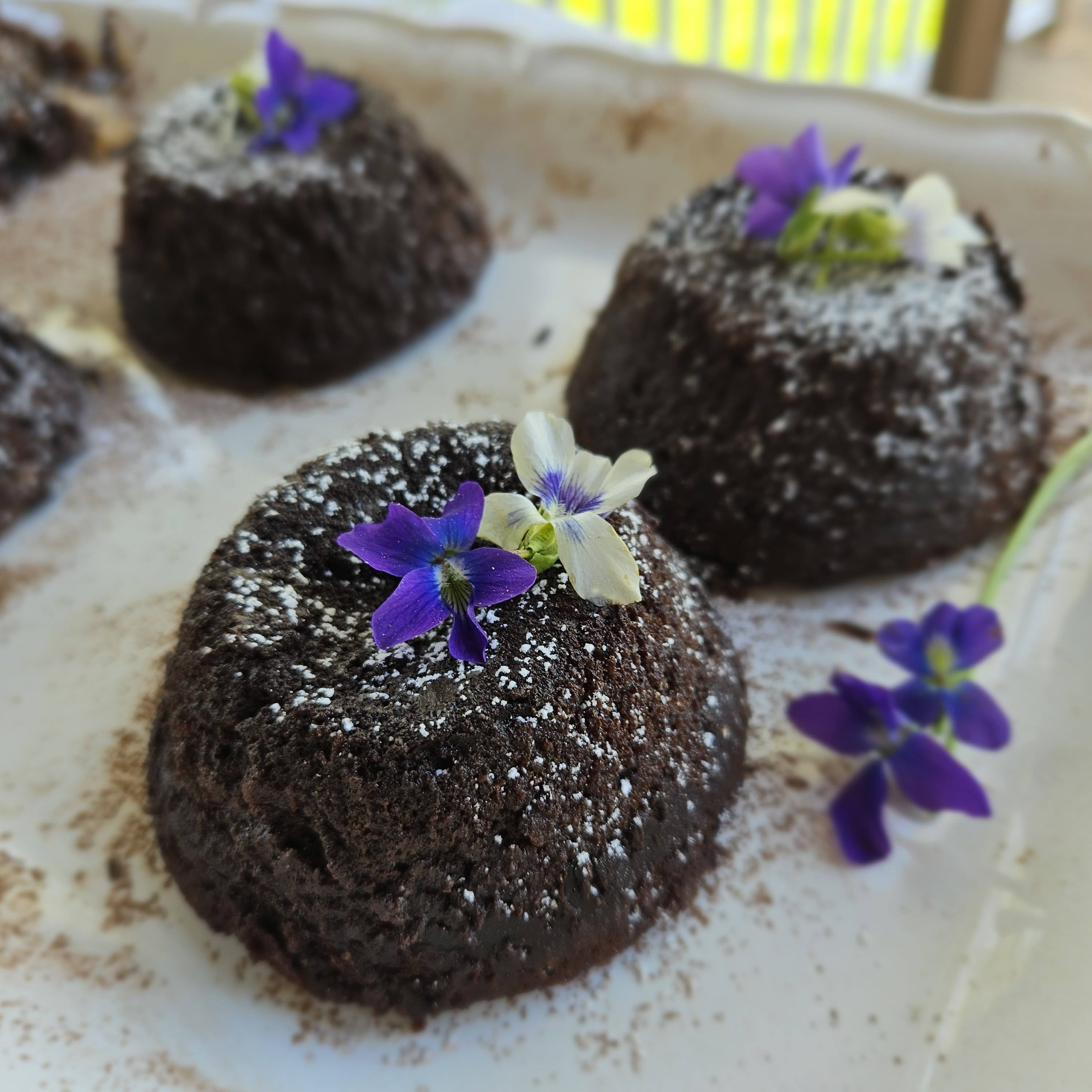
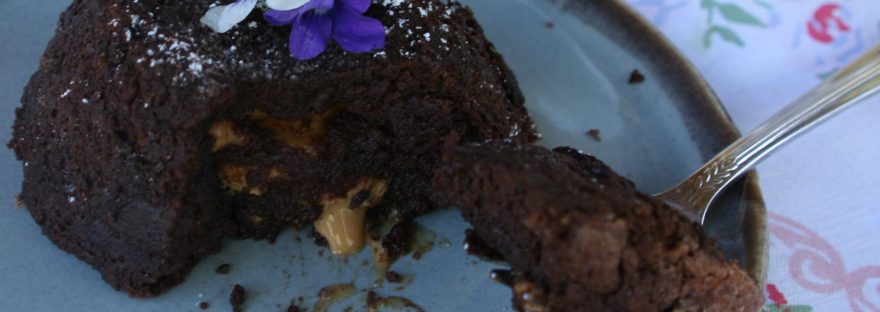
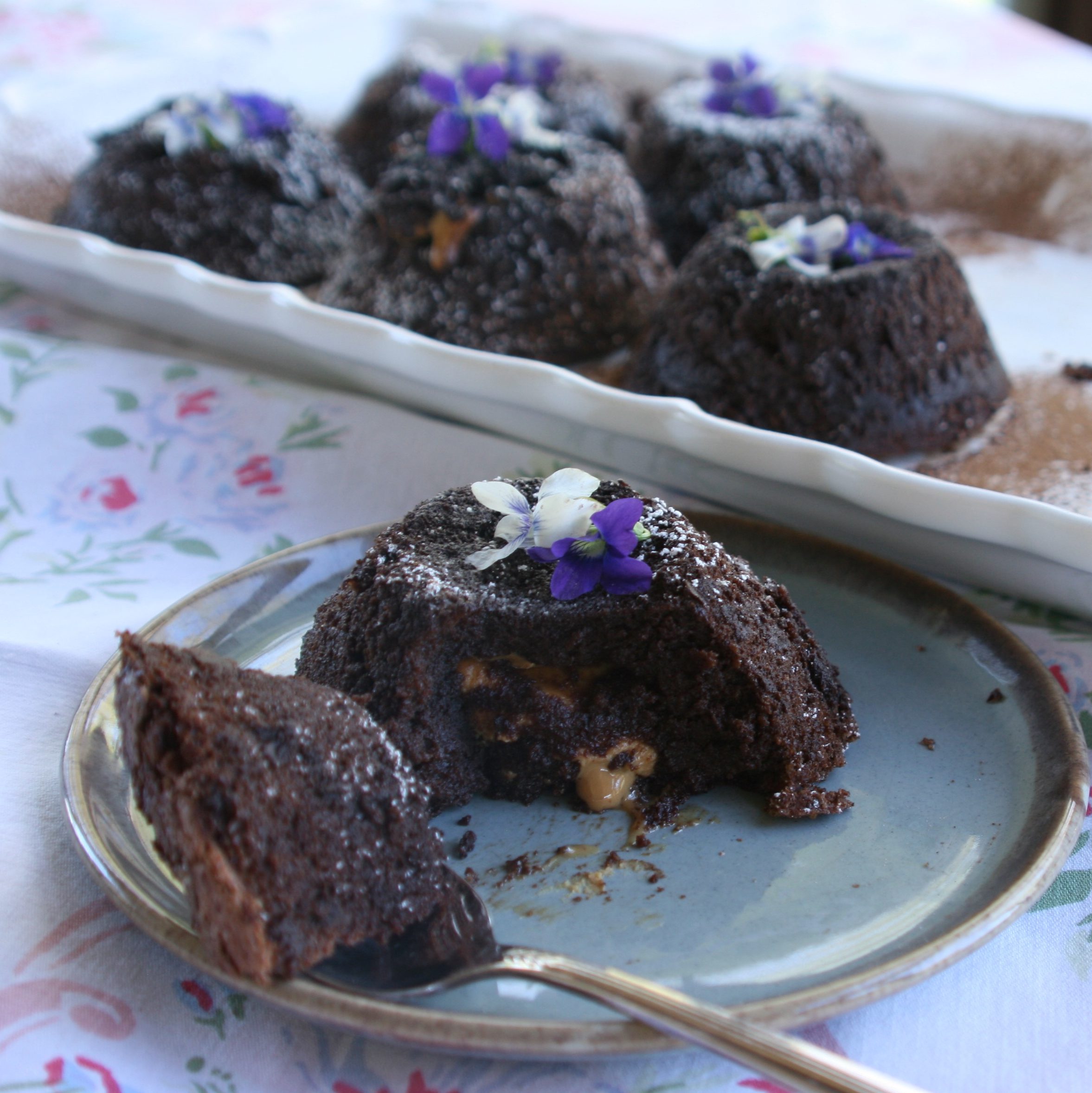
For this technical challenge, Paul Hollywood uses the Vongerichten recipe with a twist. He adds a heaping teaspoonful of peanut butter to the center of each cake, creating a delicious counterpoint to the chocolate as well as an almost foolproof way to achieve that melty center. Mine took longer to bake than the recipe called for, but the peanut butter in the middle was still soft and oozy, even if the cake surrounding it was fully cooked.


After doing some research, I think I’ve figured out why my cakes took longer to bake:
For one thing, I noticed that the bakers in the Great White Tent used metal pudding molds, while I used glass custard cups. Glass takes longer to heat up, which is not conducive to the quick, hot baking time needed for this recipe.
Second, Paul’s recipe gives the oven temperature in: Celsius, Celsius with fan (i.e., convection), Fahrenheit, and “gas mark” — which is a temperature scale used on some (mostly older) gas ovens in the U.K. and Ireland. However, the fan (or convection) temperature is listed as 180°C, a 20-degree (Celsius) difference from the temperature listed for non-convection ovens, 200°C. That’s equivalent to a 36-degree difference in Fahrenheit. When converting the convection temperature (180°C) from Celsius to Fahrenheit (356°F) for my oven, I rounded down to 350°F. (My oven only gives me 25-degree increments.) I should have paid more attention to the non-convection temperature (200°C or 400°F), since normally when converting to a convection oven you only need to turn the oven down by 25 degrees Fahrenheit.
Because I reduced my oven temperature a full 50 degrees Fahrenheit from the recommended 400°F and baked in glass rather than metal, my cakes took a full 20 minutes to bake, and even then I had to leave them in the custard cups for 10 minutes before turning them out. (This I discovered when the first one collapsed after turning it out of the baking dish “immediately,” as instructed by the recipe.)
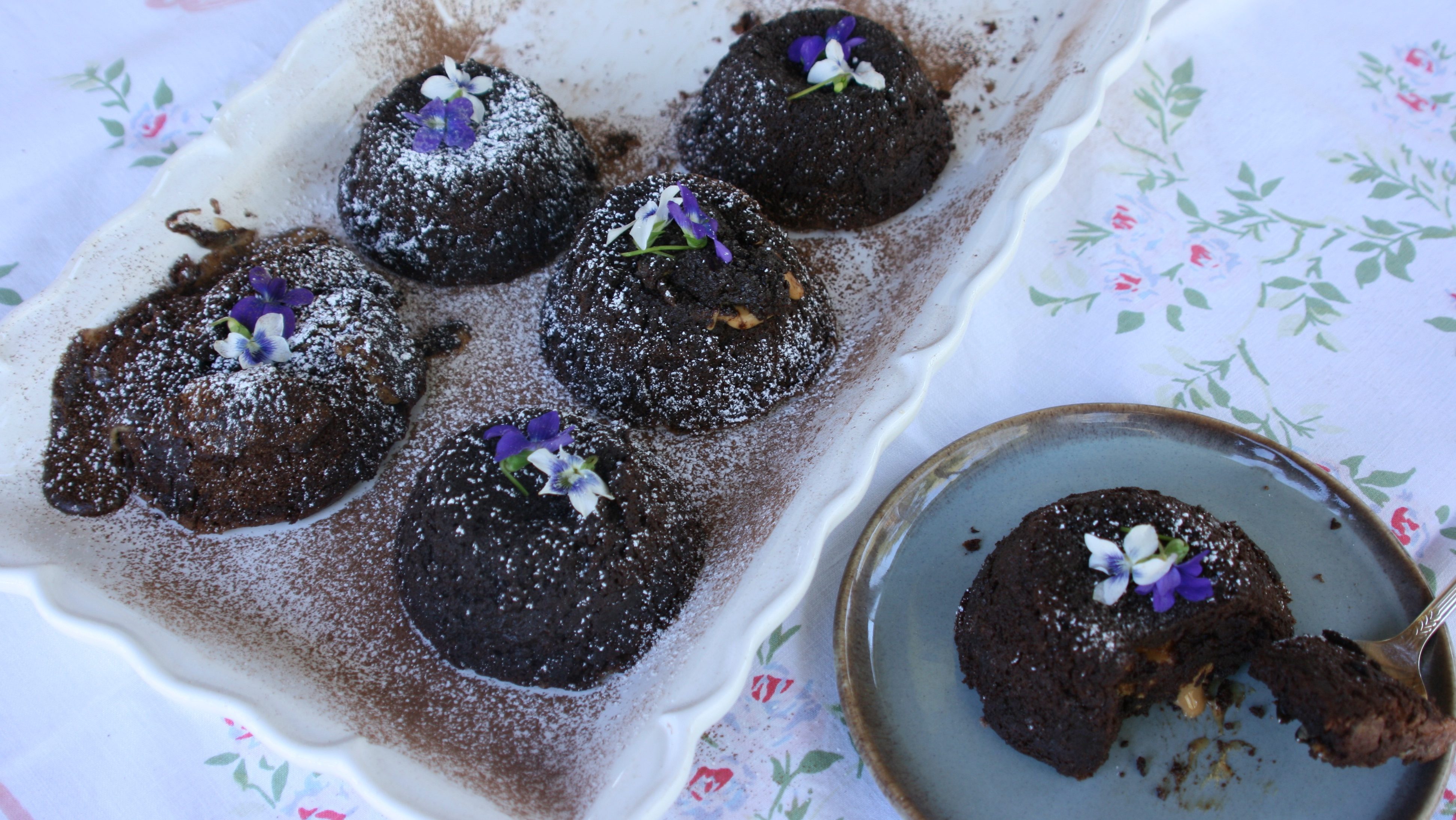
Still, the cakes were light, chocolatey and had a melty peanut butter center. Even better, I learned that they keep very well at room temperature, and with a simple, 30-second warmup in the microwave, they are just as scrumptious as when they first came out of the oven. This recipe is not difficult, but it would make a wow-worthy dessert for any dinner party and can easily be made a day or two in advance. You can even refrigerate the batter for up to two days and bake the cakes right before serving, or you can freeze the baked cakes for up to three months, then thaw and warm them in the microwave before serving. (Just make sure to bring them to room temperature first or the center might not fully melt!)
*Fun fact: The reason The Great British Bake Off is called The Great British Baking Show in the U.S. is because Pillsbury owns the U.S. trademark for Bake-Off!
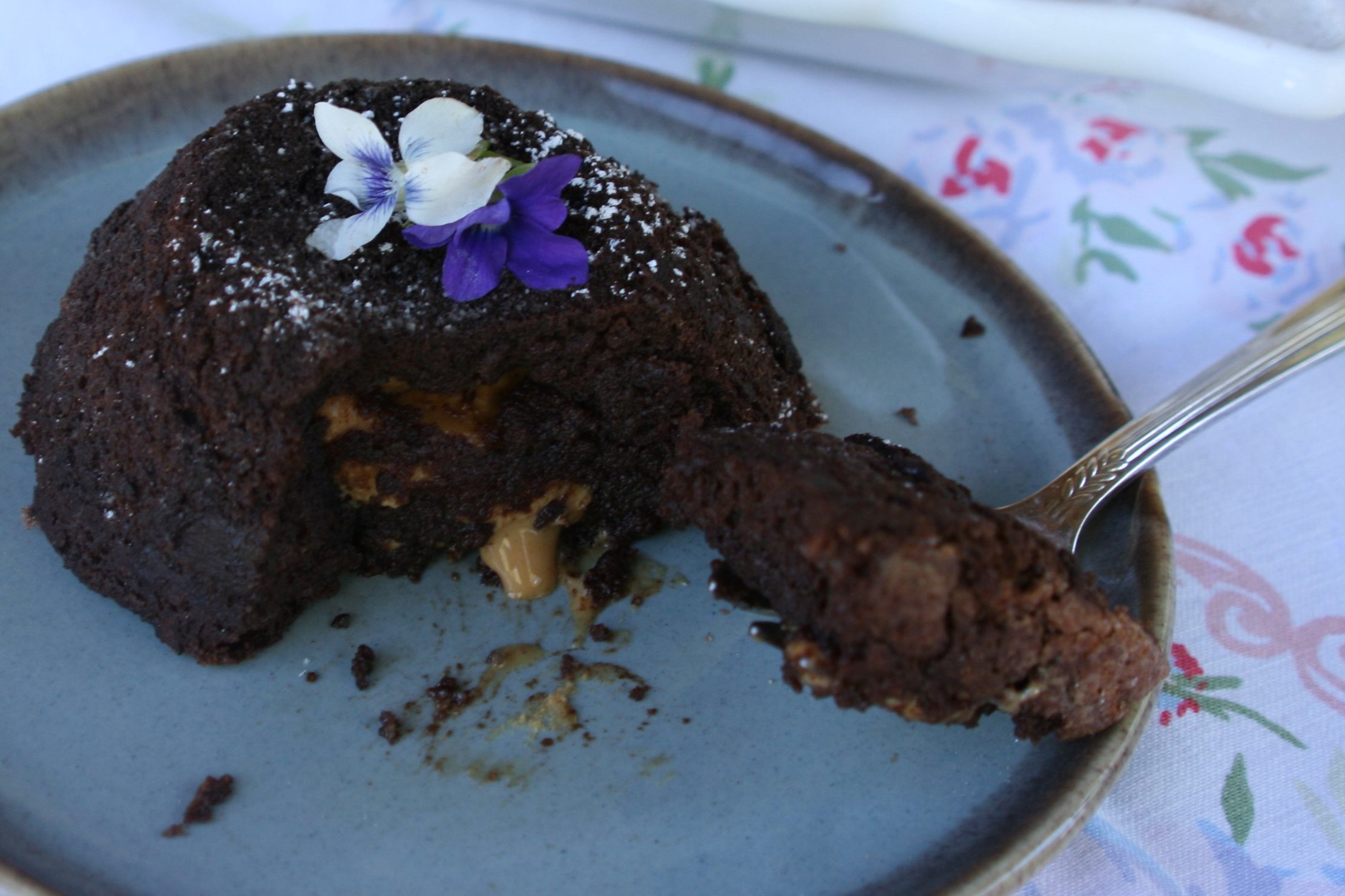

You will find Paul’s original recipe here, but I’ve adapted it for American bakers (with my own tweaks) below.
Paul Hollywood’s Molten Puddings (Lava Cakes)
Ingredients
- 2 T. cocoa powder, for dusting
- 6 oz. dark chocolate (70% cocoa solids)
- 12 T. (3/4 c.) unsalted butter, plus extra for greasing
- 3 large eggs
- 3 egg yolks
- 1/3 c. + ½ T. granulated sugar
- 2 T. all-purpose flour
- 6 heaping teaspoons smooth peanut butter (NOT natural style)
- Powdered sugar, for dusting (optional)
Directions
- Heat oven to 400°F. Grease six individual ramekins or custard dishes with butter and dust the insides with cocoa powder. Place them on a large, rimmed baking sheet.
- Prepare a bain-marie: Pour about an inch of water into a medium saucepan and place a heatproof bowl on the pan, making sure the bottom of the bowl doesn’t touch the surface of the water. Bring the water in the pan to a simmer.
- Melt the chocolate and butter together in the bowl of the bain-marie, stirring constantly. Then turn off the heat and remove the bowl from the pan, leaving the chocolate to cool slightly.
- Whisk the eggs, egg yolks and sugar together in a large bowl until thick and mousse-like. (When the whisk is lifted above the bowl, the mixture should fall back on itself in ribbons, briefly holding its shape on the surface. This is known as ribbon stage.)
- Carefully fold the cooled chocolate mixture into the egg mixture. Once it’s fully incorporated, sift the flour over the surface and fold it in, being careful not to knock the air out of the mixture.
- Divide two-thirds of the batter equally between the six prepared baking dishes, filling them about halfway. Carefully place a heaping teaspoon of peanut butter into the middle of each dish and then spoon an equal amount of the remaining batter over each.
- Place the baking sheet in the preheated oven and bake for 8-12 minutes (although it might take longer if using ceramic or glass as opposed to metal baking dishes). If they’re not done at 8 minutes, check every 2 minutes; the cakes should be risen and firm on the sides but not cracked and should have a slight wobble in the middle.
- Remove cakes from oven and leave in pan for a few minutes before unmolding. The easiest way to unmold them is to place a small dessert plate over the ramekin and flip it over. Wait about 10 seconds before lifting the baking dish off the plate. If yours are stubborn, like mine were, run a narrow knife around the rim before flipping it over.
- Dust with more cocoa powder or powdered sugar and serve immediately (ideally with vanilla ice cream) or let cool to room temperature and store in an airtight container for up to two days. Before serving, place one cake at a time on a microwave-safe plate and heat on high for 30 seconds.
Discover more from Here's the Dish
Subscribe to get the latest posts sent to your email.
