

Naples, Italy, is often called the birthplace of pizza. In fact, in 2009, Neapolitan-style pizza was registered with the European Union as a Traditional Speciality Guaranteed (TSG) food product, and in 2017, the Neapolitan art of pizza twirling joined Unesco’s list of “intangible cultural heritage” practices.
The two types of pizza most synonymous with Naples are marinara and Margherita. Pizza marinara is a cheeseless pie topped with tomato, olive oil, garlic, and oregano, much like the ingredients of marinara sauce. (They are both called marinara, or “seafaring,” because they were traditionally made by seamen’s wives when their husbands returned from fishing expeditions.)
Pizza Margherita is topped with tomato sauce, mozzarella, and fresh basil. It was named either for Queen Margherita of Savoy — wife of King Umberto I, who reigned from 1878-1900 — or for the Italian daisy of the same name, perhaps because of how the mozzarella was arranged on top of the pizza. The popular story of a Neapolitan pizzaiolo, Raffaele Esposito, baking pizzas for Queen Margherita and subsequently receiving a letter from her chamberlain giving his pizza the royal seal of approval has been pretty thoroughly debunked, but it’s still possible that the pizza, which bears the colors of the Italian flag — red, white and green — was named in her honor.

Prior to the 19th century, the word pizza, which may have evolved from the Old High German word bīzan, “to bite,” was used to refer to any round-shaped bread or dessert, according to food historian Fancine Segan. “In Pellegrino Artusi’s famed 1890s cookbook La Scienza in Cucina e l’Arte di Mangiar Bene (‘Science in the Kitchen and the Art of Eating Well’),” she writes, “there are three recipes for pizza, all of them sweet.”
But the history of pizza goes back much further, since the practice of topping flatbreads with cheese, herbs, or olive oil (as well as fruit — shoutout to Hawaiian pizza!) has been around since at least the first century, as seen in a recently discovered fresco in Pompeii that was buried during the eruption of Mount Vesuvius in AD 79.
Such pizzas were a popular street food in Naples in the early 16th century. But it was not until later that century, when tomatoes were introduced to Europe by Spanish explorers who brought them back from the New World, that the modern-day version of pizza became popular. The rest, you might say, is history.
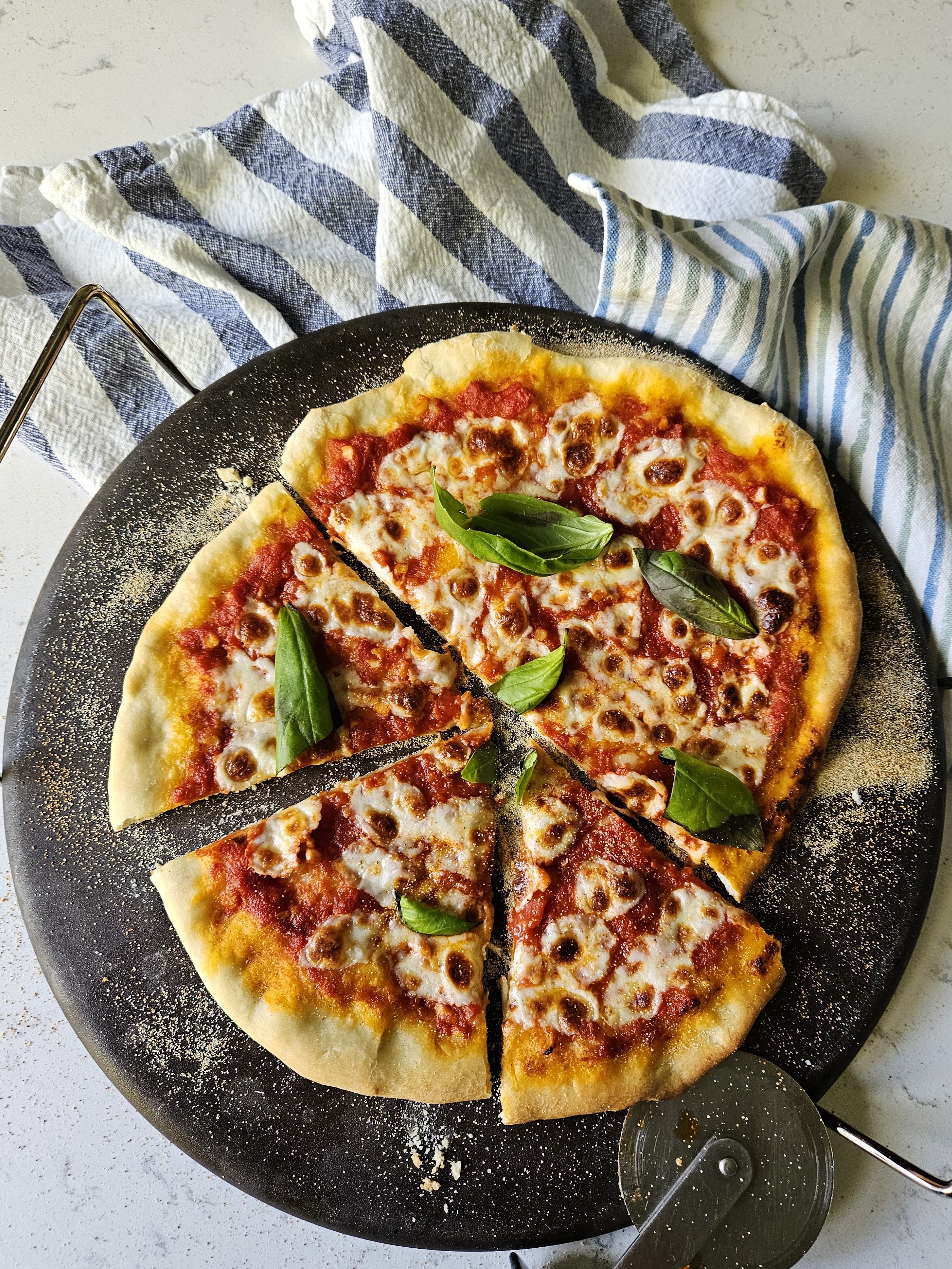
This Italian Week technical challenge was set for the bakers in the Great White Tent by Dame Prue Leith. She specified that the dough needed to be stretched really thin (no rolling pins allowed!), it should be cooked until it just begins to blacken, and the outside crust should be crispy but with a slight bend in the middle.
I’ve made pizza before, but Prue’s recipe calls for a couple ingredients I had never used — fresh yeast (as opposed to the “active dry” variety) and ‘00’ flour, which is very finely milled, enhancing its ability to absorb water faster than regular flour. That means you can use less liquid in the dough, resulting in a crispier crust. Because it has a higher protein content than all-purpose flour, it also gives pizza dough a sturdy elasticity that is essential for creating that signature thin crust.
Fresh yeast comes in foil-wrapped cubes and is harder to find than active dry or instant yeast because it has to be refrigerated. I discovered that most of my local grocery stores don’t carry it anymore. It took a couple trips to a large supermarket chain and the help of multiple customer service agents to finally locate it in the dairy case of one location. Fresh yeast is said to lend a richer, slightly sweeter flavor and has a longer active reaction time, making it ideal for dough that needs a long, slow fermentation or multiple proofs. (NOTE: If you can’t find fresh yeast, you can use active dry yeast, but you’ll need twice as much, by weight, as fresh yeast.)
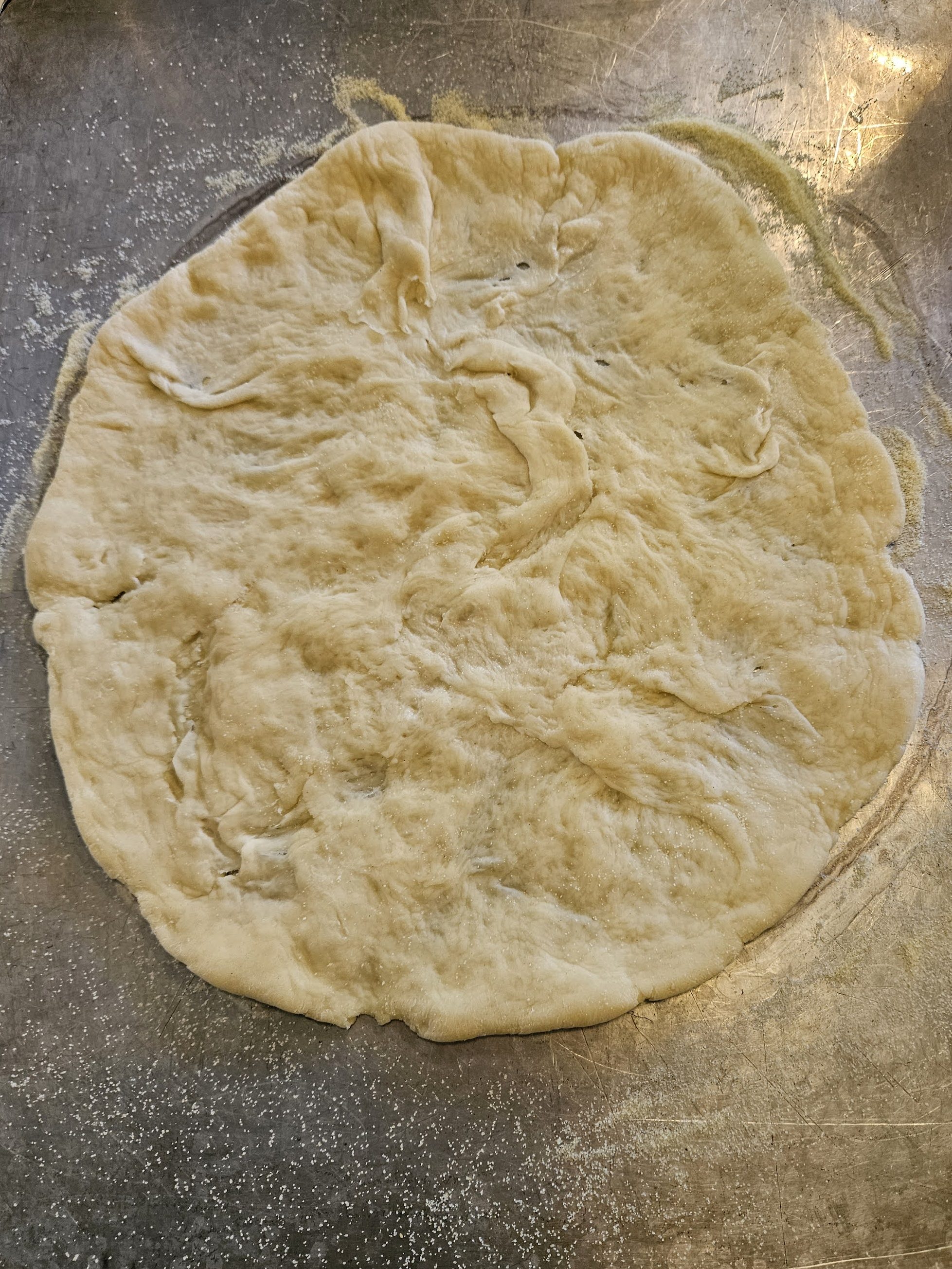
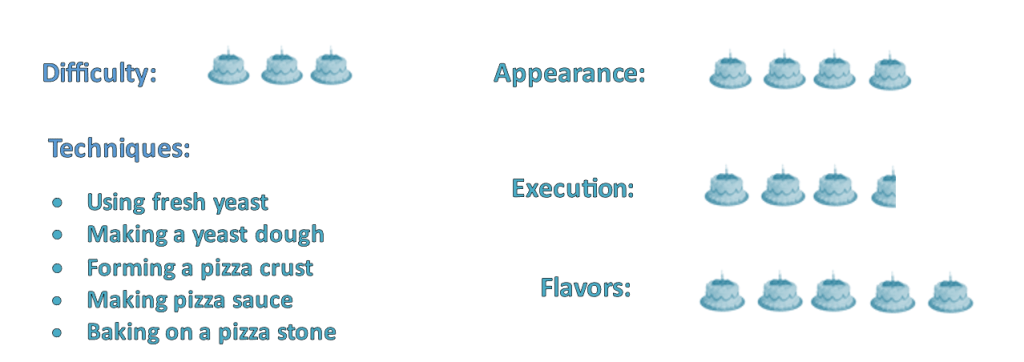
Stretching the dough into a 12-inch circle was the most difficult part of this challenge, as you can see by my first and second attempts. The stretchiness of the dough was both a blessing and a curse, as every time I stretched it to the proper size, it would bounce back. In the end, I think it was closer to 10 inches after I had repaired a few holes. But the resulting crust was thin and crispy, just the way Prue likes it.

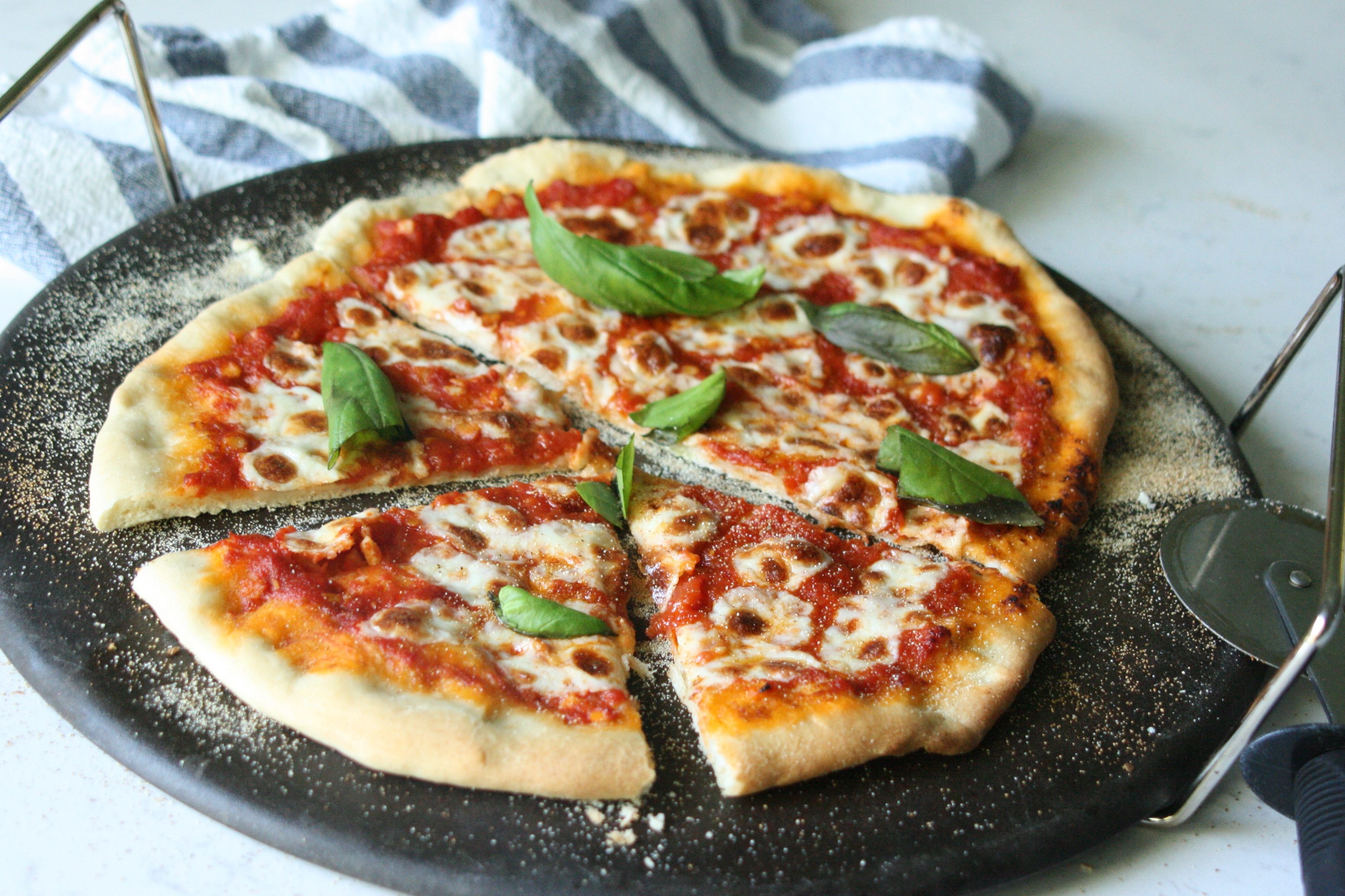
Prue’s recipe makes two pizzas, which was just enough for my husband and me. While fresh tomatoes are not required, make sure you get real San Marzano plum tomatoes in a can for an authentic-tasting sauce, and don’t skimp on the garlic — my husband’s favorite part! The mozzarella and basil lend their fresh flavors, and if you close your eyes, with the first bite you might imagine yourself in a sunny café on the streets of Naples. Ciao!
You can find Prue’s original recipe here, but I’ve adapted it for American bakers below.

Prue Leith’s Pizza Margherita
(Adapted for American bakers)
For the dough:
- 1/3 oz. (10 g.) fresh yeast, or ¾ oz. active dry (not instant) yeast
- Pinch of granulated sugar
- ½ c. lukewarm water (100°F to 110°F)
- 1½ c. ‘00’ flour, plus extra for dusting
- ½ t. fine salt
- 2 T. extra virgin olive oil, plus extra for greasing
- Semolina, for dusting
For the sauce:
- 3 T. extra virgin olive oil
- 4 cloves garlic, peeled and finely chopped
- 14 oz. can San Marzano plum tomatoes
- Juice of ½ lemon
- ½ t. granulated sugar
- Pinch of salt
Toppings:
- 1 T. extra virgin olive oil
- 4 oz. fresh mozzarella, torn into pieces
- 6-12 basil leaves
Directions
- To make the dough, first mix the yeast with the pinch of sugar and 1 tablespoon of the warm water, and stir until yeast dissolves into the consistency of cream. In a separate bowl, sift the flour and salt together and make a well in the center. Pour the yeast mixture into the well. Add the olive oil, then enough of the water so that it comes together into a soft dough.
- Knead by hand for about 10 minutes until dough forms a smooth ball. Place on a baking sheet and cover with plastic wrap that’s been lightly coated with oil. Leave in a warm place to rise until doubled in size (about 45 minutes).
- Meanwhile, make the sauce: Heat the olive oil in a frying pan over medium heat. Turn heat to medium-low and add the garlic. Fry garlic for 1-2 minutes until softened but not colored. Add the tomatoes and mash them with the back of a wooden spoon or a potato masher. Bring mixture to a boil and add lemon juice, sugar, and salt. Reduce heat to low and simmer for 5-10 minutes until the liquid is reduced to a sauce consistency. Remove from heat and season to taste.
- Heat oven to 475 °F and place two pizza stones or baking sheets in the oven. (I used one of each.)
- Uncover the dough and knock it back on a lightly floured work surface. Divide dough in half.
- Form one half of the dough into a circle, then stretch and toss it into a 12-inch circle, keeping the outer edge slightly thicker to form a crust.
- Dust a pizza peel or another baking sheet with semolina. Transfer the dough circle to the peel or baking sheet and brush it with 1 tablespoon olive oil. Spread about 3 tablespoons of the tomato sauce over the dough and top with half the mozzarella.
- Repeat steps 6 and 7 with the other half of the dough.
- Sprinkle the hot stones or baking sheets with semolina. Quickly transfer the pizzas onto the stones or baking sheets and bake for 5-12 minutes, until the crusts are browned and the cheese is bubbling. Remove from the oven and top with basil before serving.
Discover more from Here's the Dish
Subscribe to get the latest posts sent to your email.
