
Like revenge, mousse is a dish best served cold. Fortunately for us, however, it’s infinitely more appetizing.

Mousse was an 18th century invention by who else but the French. The first mousses were savory. Once they figured out that eggs, and especially egg whites, could be beaten into a foam and folded into a paté or puree, French chefs made mousses out of everything from vegetables to seafood to foie gras. The basis for these recipes was a mousse à la crème, which they also began flavoring with saffron, fruit or coffee. The famed chocolate mousse, or mousse au chocolat, emerged on the scene in the mid-1700s.
While mousse, meaning foam in French, can refer to everything from the head on a just-poured glass of champagne to something we put in our hair to add body, the word has a long history associated with chocolate, dating from the 1600s, when chocolate was first introduced to the European aristocracy. At the time, chocolate was only served as a drink, but it was prepared in a special pot called a chocolatière with a utensil known as a molinillo, whose purpose was to agitate the liquid and make it frothy.
This chocolat moussé, or frothed chocolate, soon morphed into mousse de chocolat as people began adding eggs to the liquid chocolate so that it would make even more foam. Then people began preferring the foam to the drink itself. The first known recipe for what we now recognize as chocolate mousse was published in a 1750 book, La Science du Maître d’Hôtel Confiseur, or The Science of the Butler Confectioner, written by a renowned French chef we know only as Menon.
Technically, a mousse is made by folding an aerator (usually whipped cream, meringue or pâte à bombe — which is made by whipping whole eggs or egg yolks with sugar) into a base (e.g., melted chocolate, custard or puree). Gelatin is often added as a stabilizer. The mousse is then chilled until set.
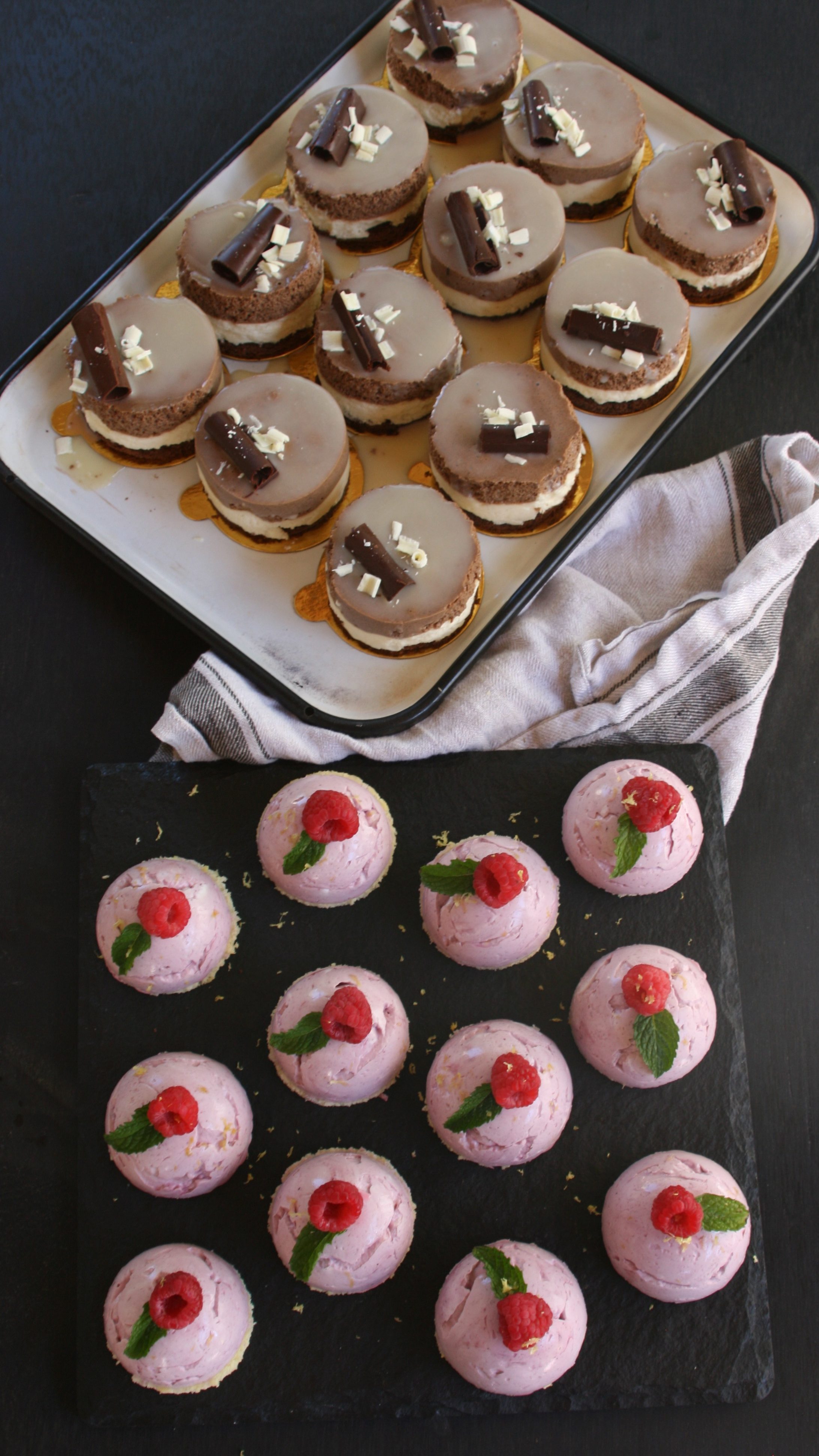
This showstopper challenge was to make 24 mini mousse cakes — 12 each of two different flavors — which means there had to be an element of cake in addition to one or more mousses (moose? mice? meeses?) in the finished product. Mary Berry said she was looking for different textures — a soft sponge and a mousse that was set but not rubbery. Paul Hollywood specified that the mousse should be “full of flavor” and melt in the mouth. He also said he favored leaf gelatin, as opposed to the powdered stuff, and egg whites over cream as the aerator.
I didn’t follow his advice to the letter, having only powdered gelatin on hand, but I did make three different kinds of mousse, two using meringue and one using whipped cream.
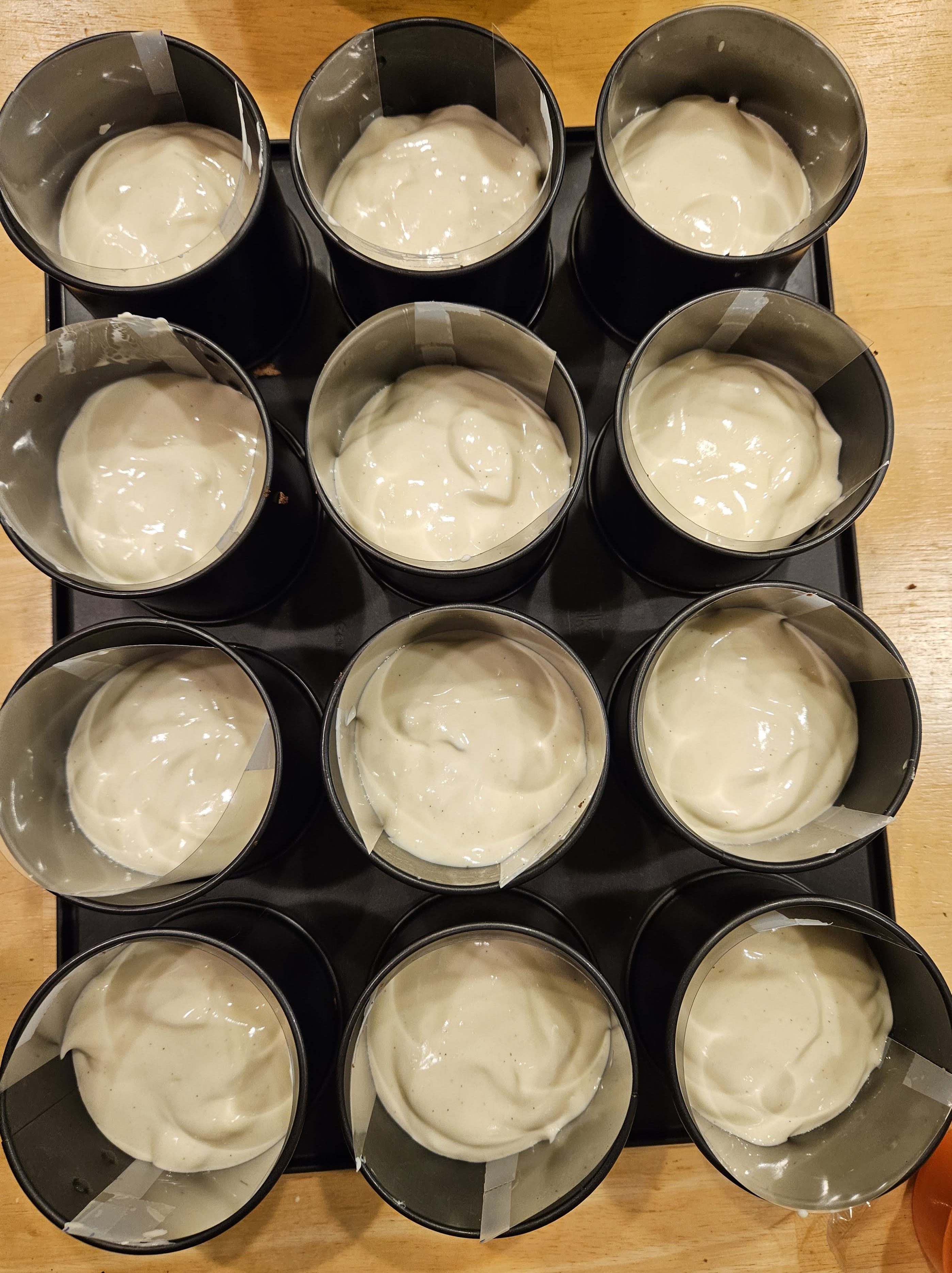
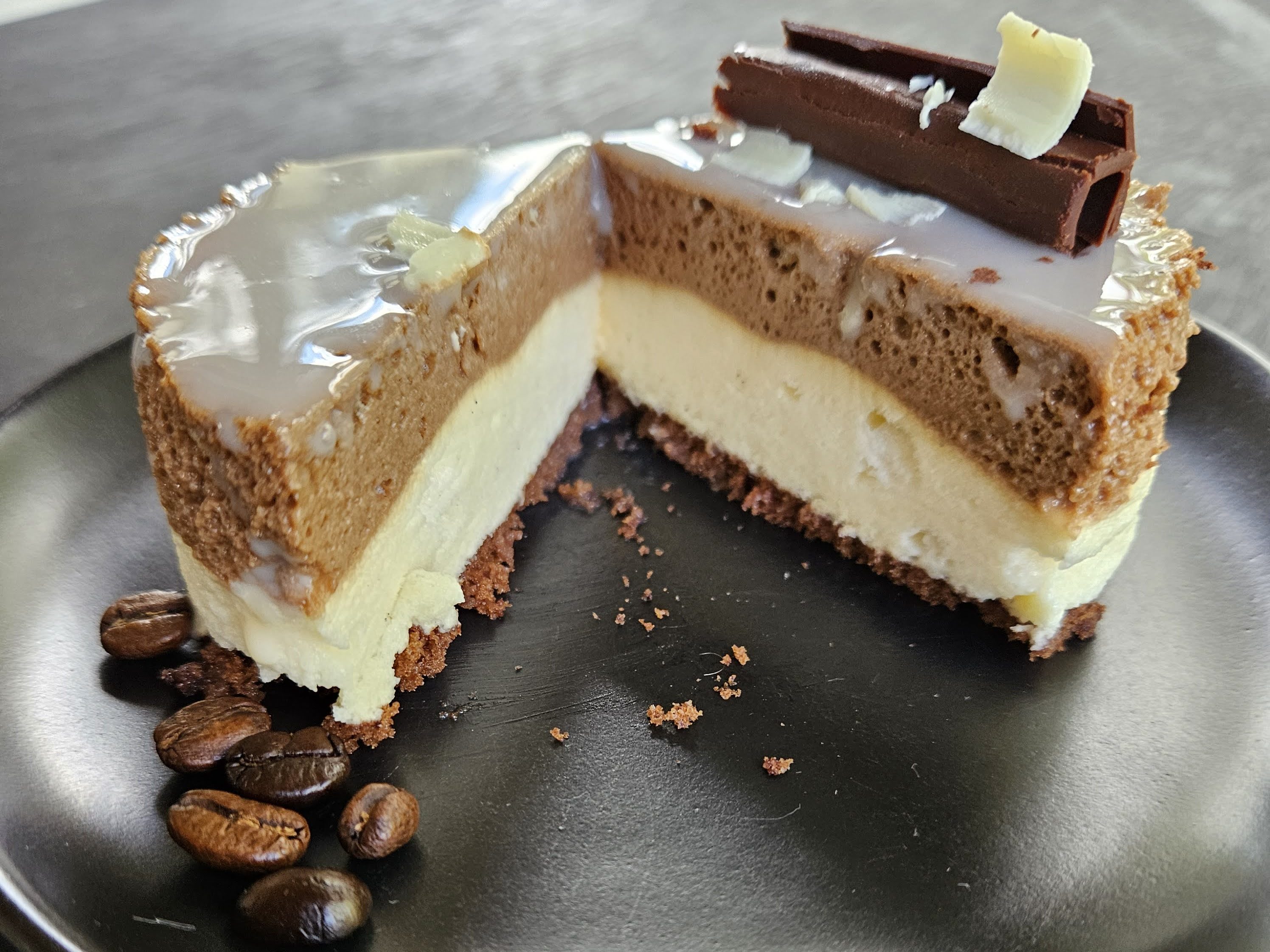
For my Caramel Macchiato Mousse Cakes, I made two different flavors of mousse — vanilla and coffee — both using meringue as the aerator. These were layered on top of a chocolate sponge and topped with a salted caramel ganache (which turned out to be more like a sauce, since it didn’t set properly).

My Lemon-Berry Mousse Cakes featured a dome-shaped, berry-flavored whipped cream mousse nestled on a lemon sponge with a smaller hemisphere of raspberry gelée hidden inside.

Like many of these fancy desserts, these little mousse cakes aren’t difficult to make, just a bit fiddly. Of course, for the bakers in the Great White Tent, who had only four hours to complete the assignment on a really hot day without any air conditioning in the tent, there were all sorts of complications. But if you’re living in the real world, it just takes planning and time management to make sure they’re ready for whatever special occasion you plan to serve them.
Mousses need time to set, and each layer must be chilled before the next layer is added, so it makes perfect sense to spread this bake out over several days, leaving them in the fridge overnight so they’re ready for the next step the following day. I divided the work into three days (four counting the day we ate them!), making it manageable even during a particularly busy time for me at work:
- Day 1 — Make the chocolate sponge and the vanilla mousse for the caramel macchiato mousse cakes, and the raspberry gelée for the lemon-berry mousse cakes.
- Day 2 — Make the coffee mousse and the lemon sponge.
- Day 3 — Make the caramel ganache, chocolate curls and the berry mousse, and assemble the lemon-berry mousse cakes.
- Day 4 — Remove from molds, garnish and serve.


As I mentioned previously, I had problems with the caramel ganache. My caramel-making skills are somewhat temperamental, and I’m always afraid it will either crystallize or burn. This time, I took it off the heat too soon, so it didn’t turn that beautiful golden amber color. Perhaps that’s why it didn’t set; it simply slid down the sides of the mousse. What the Caramel Macchiato Mini Mousse Cakes lack in appearance, however, they make up for with their light, airy texture and multilayered, creamy flavors of salted caramel, coffee and vanilla, followed by the chocolate sponge base.
As for the Lemon-Berry Mini Mousse Cakes, I could have done a better job filling the molds (you can see some gaps in the surface of the mousse), but the lemon sponge complements the berry mousse nicely, and when you hit the raspberry gelée surprise inside, it really makes your tastebuds sing.

Somewhat serendipitously, these mini mousse cakes were ready in time for a potluck dinner party I was invited to, so I was able to share them with good friends around a table after a delicious meal we all contributed to. I can’t think of any occasion more special than that.


Caramel Macchiato Mini Mousse Cakes
Credit for vanilla mousse: HomeCookingAdventure.com
Credit for coffee mousse: Recipes.TimesOfIndia.com
Credit for caramel ganache: JulesCooking.com
Credit for chocolate curls: SpendWithPennies.com
For the chocolate sponge:
- ½ c. all-purpose flour
- ¼ c. cocoa powder
- 4 t. vegetable oil
- ½ t. vanilla extract
- 3 large eggs, room temperature
- ½ c. granulated sugar
For the vanilla mousse:
- 2 c. milk
- 3 egg yolks
- 2 T. sugar
- ¼ t. salt
- 1 T. all-purpose flour
- ¼ c. cornstarch
- 2 t. vanilla bean paste
- 2½ t. unflavored gelatin powder
- 3 T. cold water
- 3 egg whites, room temperature
- 2/3 c. granulated sugar
- ¼ t. salt
For the coffee mousse:
- 1½ t. unflavored gelatin powder
- ¼ c. cold water
- 1 c. heavy cream
- 2 T. instant coffee or espresso powder
- 1 T. cocoa powder
- 4 large eggs, separated
- 6 T. granulated sugar, divided
For the salted caramel ganache:
- ¾ c. sugar
- ¼ c. water
- 7 oz. heavy cream
- 3½ oz. white chocolate, chopped
- ¾ t. flaky salt
For decoration and to serve:
- 4 oz. semisweet chocolate
- 4 t. butter
- 1 bar white chocolate
Directions
-
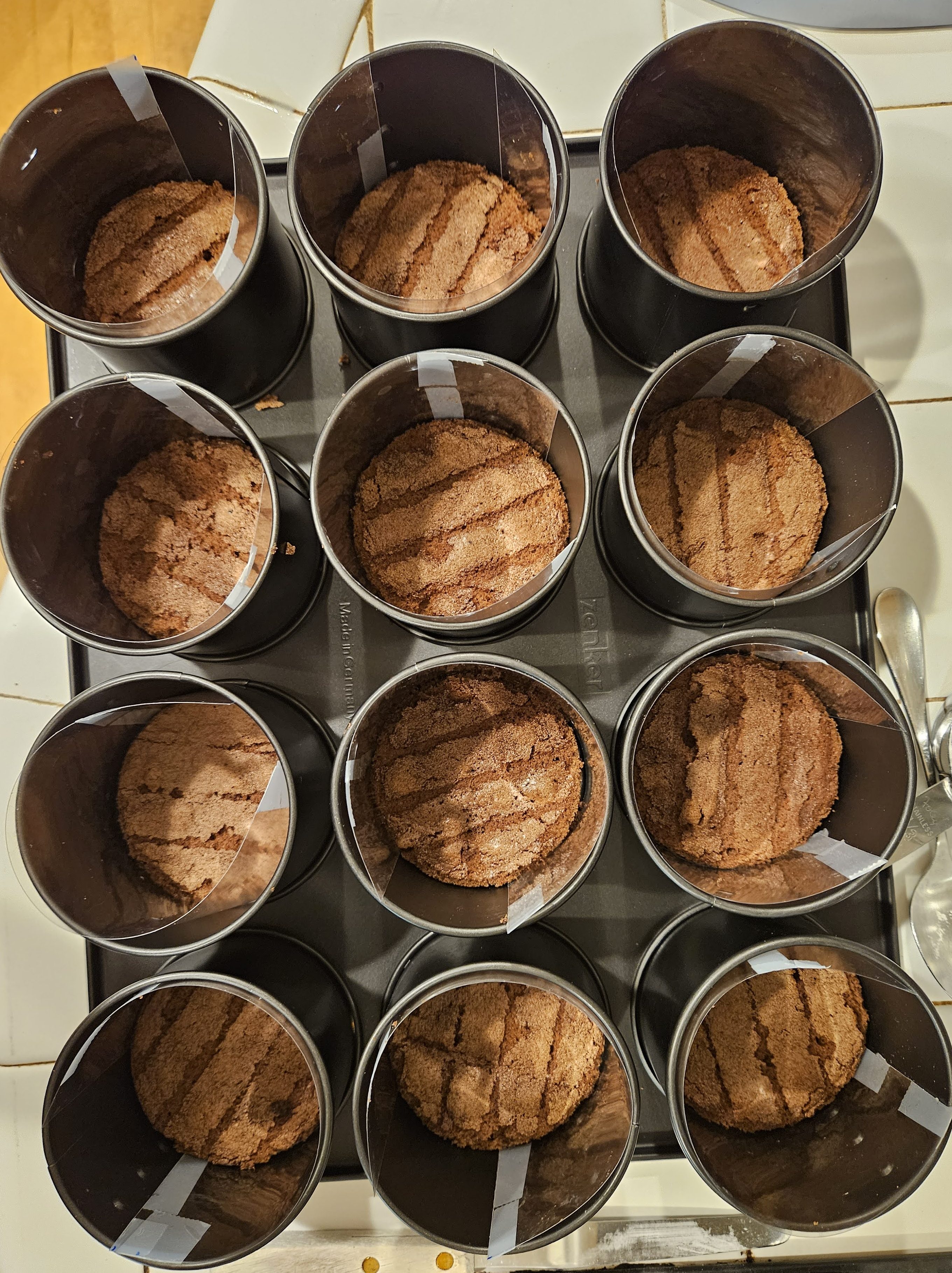
NOTE: You will need 12 individual cake molds or tart tins with removable bottoms. Mine are about 3 inches in diameter and 3 inches tall. You also need acetate strips to line the molds.
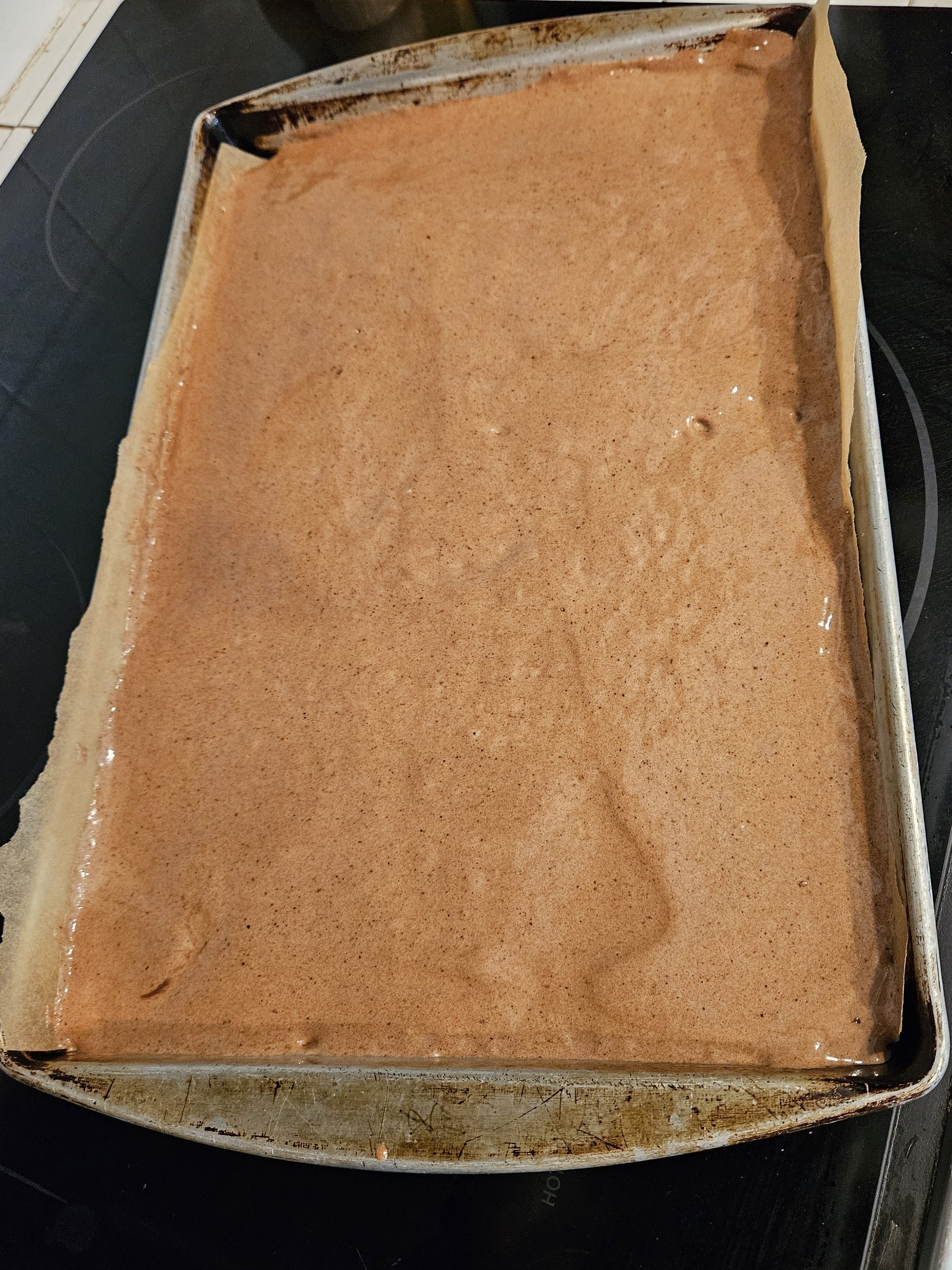
- To make the chocolate sponge, first prepare 12 individual cake molds or tart tins by lining the sides with acetate. Preheat oven to 350°F. Grease and line a 10-by-15-inch jellyroll pan with parchment paper.
- Sift together the flour and cocoa powder and set aside. Combine oil and vanilla extract in a small bowl and set aside.
- In the bowl of a stand mixer fitted with a whisk attachment, beat the eggs for 1-2 minutes on medium speed. Once they start to become thick and foamy, add the sugar, 1 tablespoon at a time, while continuing to whisk.
- Turn the mixer up to medium-high and continue to beat the eggs for 5-7 more minutes, until they become pale and fluffy and triple in volume. This is called the ribbon stage, when the batter falls back on itself in ribbons that stay on the surface for 10 seconds when you lift the beater out of the bowl.
- When the eggs are ready, gently fold in half the flour and cocoa with a spatula. Add the remaining flour and cocoa, and continue to gently fold into the mixture until there are no more pockets of flour or cocoa powder. (Use a light hand, so you don’t lose the air in your eggs.) Drizzle the oil and vanilla down the side of the bowl, and gently fold until combined.
- Transfer the batter to the prepared pan, and use an offset spatula to gently spread the batter to the sides and corners of the pan, forming an even layer. Bake for about 10-11 minutes or until the cake is no longer sticky and bounces back when pressed lightly with a finger.
- When cool enough to touch, transfer the cake to a cooling rack and gently peel off the parchment. Cool completely, then cut into rounds the same size as your cake molds, and place them into the individual cake molds lined with acetate.
- To make the vanilla mousse, first pour the milk into a medium saucepan and bring to a simmer.
- Meanwhile, whisk the egg yolks with sugar and salt until well combined. Add flour and cornstarch and whisk to combine.
- Continue to whisk the egg yolk mixture while gradually adding the hot milk to the bowl. Then pour the mixture back into the saucepan and return it to the heat. Cook, stirring constantly, until the mixture boils and thickens. Remove from heat and stir in vanilla extract.
- Pour the pastry cream into a clean bowl and cover it with plastic wrap, pressing the wrap directly onto the surface of the pastry cream to prevent it from forming a skin on the surface. Let cool to room temperature.
- In a small, clean saucepan, dissolve the gelatin in the cold water and let it sit for about 5 minutes to absorb the liquid. Then put the pan over low heat, stirring until gelatin is completely dissolved and liquified. Pour over the pastry cream and stir to combine.
- To make the meringue, place the egg whites, sugar and salt in the heat-proof bowl of an electric mixer. Place the bowl over a pan of simmering water, making sure the bottom of the bowl doesn’t touch the surface of the water. Whisk constantly until the egg whites reach 160°F on an instant-read thermometer. It should only take about 5 minutes.
- Remove bowl from heat and start mixing the egg whites on high speed until glossy stiff peaks form, about 5-7 minutes. Gently fold the meringue into the pastry cream mixture.
- Divide the mousse evenly among the cake molds and refrigerate for 2 hours or overnight.
- To make the coffee mousse, mix the gelatin with the cold water and set it aside for about 5 minutes to absorb the liquid.
- In a saucepan, heat the cream, coffee powder and cocoa powder on low heat until the powders dissolve. Do not let it boil.
- In a heat-proof bowl, whisk the egg yolks and 2 tablespoons sugar together. Continue whisking while gradually pouring the hot cream mixture into the bowl.
- Once all the cream is whisked into the egg yolks, transfer the mixture back to the saucepan on low heat and keep whisking until it thickens. Remove from heat and pour into a large bowl.
- Add softened gelatin to the bowl with the pastry cream, and stir until the gelatin is dissolved and well-incorporated. Cover with plastic wrap, pressing the plastic onto the surface of the pastry cream to prevent a skin from forming. Set aside to cool.
- To make the meringue, place the egg whites and remaining 4 tablespoons of sugar in the heat-proof bowl of an electric mixer. Place the bowl over a pan of simmering water, making sure the bottom of the bowl doesn’t touch the surface of the water. Whisk constantly until the egg whites reach 160°F on an instant-read thermometer. It should only take about 5 minutes. Immediately remove from heat and mix on high speed until glossy peaks form.
- After the cream cools down, gently fold in the egg whites, using the cut and fold method to avoid losing too much aeration. Divide the mousse evenly among the cake molds and refrigerate for 2 hours or overnight to set.
- To make the caramel ganache, combine the sugar and water in a deep saucepan; bring to a boil over medium heat. Continue boiling until sugar is completely dissolved and mixture turns a golden amber color. Slowly stir in the cream. Then turn off the heat and stir in the white chocolate. Once the chocolate is melted and the mixture is smooth, sprinkle in the flaky salt and mix gently. Pour into a bowl, cover and leave to cool.
- When mixture has cooled but is still pourable, spoon a tablespoon or two over the coffee mousse. Chill. Once set, transfer to freezer for a few hours before serving.
- To make chocolate curls, melt semisweet chocolate and butter in the microwave at 30% power in 30-second intervals, stirring after each. Stir until smooth. Using an offset spatula, spread melted chocolate in a large, flat baking pan as thin as possible. Freeze for 3-4 minutes until firm to the touch. Use a metal scraper or spatula to scrape the chocolate into curls. If the chocolate begins to soften up, pop the pan back into the freezer for a couple minutes. Carefully place curls in an airtight container and refrigerate until ready to use.
- For white chocolate curls or shavings, use a vegetable peeler to scrape the narrow side of the chocolate bar.
- About half an hour before serving, remove mousse cakes from freezer and remove from molds. Transfer the cakes to small cardboard or parchment rounds. Peel away the acetate and top each cake with chocolate curls and white chocolate shavings.
Lemon-Berry Mini Mousse Cakes
Credit for lemon sponge: MasterClass.com
For the raspberry gelée:
- ¾ c. raspberries, fresh or frozen
- 3 T. granulated sugar, divided
- 2¼ t. lemon juice, divided
- 1½ t. unflavored gelatin powder
- 4 T. cool water, divided
For the lemon sponge:
- 1 c. all-purpose flour
- ⅛ t. fine salt
- 3 large eggs
- ½ c. granulated sugar
- 1 t. vanilla extract
- 1 T. fresh lemon juice
- 2 t. fresh lemon zest
For the mousse:
- ¾ c. mixed berries, fresh or frozen
- 1 T. granulated sugar, divided
- ¾ t. lemon juice
- 3 t. unflavored gelatin powder
- 3 T. cool water
- ¾ c. heavy cream
- ¼ c. powdered sugar
- ½ c. mascarpone cheese, chilled
- ¼ t. vanilla extract
- ½ t. almond extract
- pinch of salt
For assembly:
- 12 whole raspberries
- 12 mint leaves
- Lemon zest
Directions
-
NOTE: You will need 12 dome-shaped silicone molds, about 2½ to 2¾ inches in diameter. You also need 12 dome-shaped silicone molds about 1 inch in diameter.
- To make the gelée, combine the berries with 1 tablespoon of sugar and ¾ teaspoon of lemon juice in a saucepan. Bring to a simmer over medium heat, stirring and smashing the berries with the spoon as they soften.
- Once the berries have broken down, transfer the mixture to a blender. (Be careful when blending hot liquid!) Puree until smooth. Pour puree through a fine-mesh strainer to remove seeds, and then return it to the saucepan. You should have about 1/2 cup of puree.
- Stir gelatin powder into 2 tablespoons of cool water and let sit for a few minutes to soak up the liquid.
- To the puree, add the 2 tablespoons of remaining sugar and 1½ teaspoons of lemon juice, as well as the remaining 2 tablespoons of water. Heat until it just starts to bubble, then add the softened gelatin mixture to the warm puree mixture, and whisk until all the gelatin has dissolved and the mixture is smooth.
- Pour the warm mixture into 1-inch silicone dome-shaped molds. Refrigerate overnight to set. Before unmolding, pop the molds into the freezer for about 30 minutes.
- To make the lemon sponge, first preheat oven to 350°F. Grease and line a 10-by-15-inch jellyroll pan with parchment paper.
- Sift the flour and salt together and set aside.
- In the bowl of a stand mixer fitted with the whisk attachment, whisk the eggs and sugar on medium-high speed for about 5 minutes until the egg mixture reaches ribbon stage — when the batter falls back on itself in ribbons that stay on the surface for 10 seconds when you lift the beater out of the bowl.
- Add vanilla extract, lemon juice and lemon zest, and whisk until just incorporated, a few seconds more.
- Sprinkle one-third of the flour mixture over the egg mixture and gently fold it in, being careful not to deflate the egg mixture. Then sprinkle the rest of the flour over the batter and gently fold it in until fully incorporated. Avoid overmixing.
- Transfer the batter to the prepared pan and gently smooth the surface with an offset spatula. Bake for about 10-11 minutes or until cake is no longer sticky and bounces back when pressed lightly with a finger.
- When cool enough to touch, transfer the cake to a cooling rack and gently peel off the parchment. Cool completely, then cut into rounds the same size as the larger dome-shaped molds. Place in airtight container until ready to use, placing parchment or wax paper between layers so they don’t stick together.
- To make the mousse, combine the berries with 1 tablespoon of sugar and ¾ teaspoon of lemon juice in a saucepan. Bring to a simmer over medium heat, stirring and smashing the berries with the spoon as they soften.
- Once the berries have broken down, transfer the mixture to a blender. (Be careful when blending hot liquid!) Puree until smooth. Pour through a fine-mesh strainer to remove seeds and then return to the saucepan. You should have about 1/2 cup of puree.
- Stir gelatin powder into the cool water and let sit for a few minutes to soak up the liquid.
- Reheat puree over a medium heat until it just begins to simmer. Stir in the softened gelatin mixture and whisk until all the gelatin is dissolved and mixture is smooth. Set aside and leave to cool until lukewarm.
- In the bowl of a stand mixer fitted with the whisk attachment, whip cream and powdered sugar together until frothy. Add mascarpone and continue to whip until the mixture holds soft peaks. Add almond and vanilla extracts, then fold in the cooled berry mixture until fully incorporated. Transfer to a piping bag fitted with a ½-inch plain tip.
- To assemble the mousse cakes, pipe the mousse into the larger dome-shaped molds until not quite full. Gently press the gelées, dome-side down, into the mousse-filled molds. Smooth the surface of the mousse with an offset spatula to keep it level with the top of the mold.
- Press the cake rounds into the top of the mousse. Freeze for at least 3 hours, or overnight, until completely firm.
- Once frozen, remove the mousse cakes from the molds and place on a frozen cookie sheet lined with parchment paper. Return to the freezer.
- About half an hour before serving, remove mousse cakes from freezer. Top each with a raspberry and mint leaf and sprinkle with lemon zest.
Up Next: Jumbles
Discover more from Here's the Dish
Subscribe to get the latest posts sent to your email.
