What’s the difference between crème caramel and flan? Apparently nothing, when you’re talking about the dessert baked with a golden caramel sauce that tops a creamy, light yellow custard base when it's turned upside down and popped out of its ramekin. But this technical challenge is for crème caramel, and since I have pledged to tackle every challenge set before the bakers in the Great White Tent, I will do my best to create the best crème caramel I possibly can.
Category: featured
Torte Cake
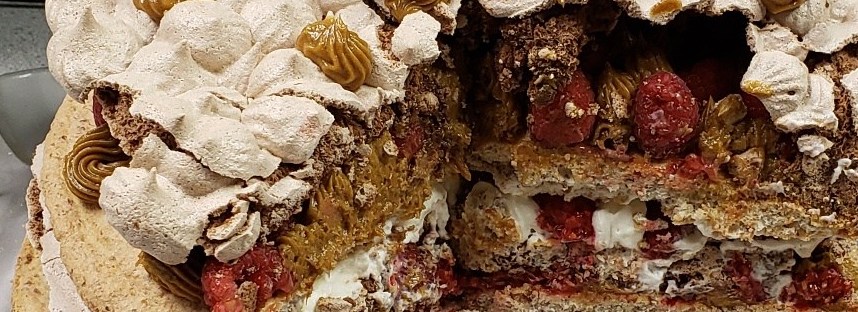
One of my favorite flavor combinations is chocolate and orange. So when the Great British Baking Show tasked its contestants with baking a torte cake with multiple layers of filling, it was more than intuition that prompted me to choose these two flavors. Wanting to infuse my orange filling with the essence of fresh oranges, I chose a recipe for orange curd. My complementary filling would be a simple chocolate mousse, and I planned to enrobe the entire torte in a chocolate ganache. To top it all off, and add even more intense orange flavor, I decided to make candied orange zest to use as a garnish.
Showstopper Fruit Tart
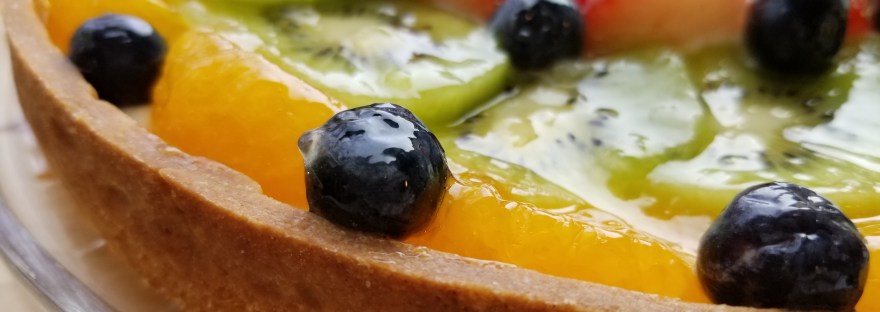
I decided to make the best fruit tart I could muster using the building blocks of some of the best pastries on the planet—pâte sucrée for the base, crème patissiere for the filling, and beautifully arranged and gorgeously glazed fresh fruits and berries on top.
Mary Berry’s Treacle Tart
Harry Potter loves treacle tart so much that he smells it when he is in the presence of the love potion Amortentia. Treacle tart is also so quintessentially British that its main ingredient, golden syrup, originated in the U.K. and is still sold under the original brand name—Tate & Lyle. When I opened the bottle it smelled a lot like pancake syrup, but when I tasted it…Mmmmm! It had a sweet buttery flavor unlike anything I’d ever tried before. I can see why British expats pine for it here in the U.S.
Tarte Tatin
Basically, the tarte tatin is an upside-down pie, usually apple, with the fruit caramelized in butter and sugar on the stove before being topped with pastry and baked. After baking, the tart is turned upside down onto a plate so the fruit is on top, covered with a golden caramel sauce.
Bagels
For my sweet bagels, I went with one of the more complicated recipes I found, but it gives very detailed instructions with lots of photos, so those of us who are novice bagel bakers can tell if we’re doing it right! I did alter the recipe from plain bagels into cranberry orange spice bagels, but I’ll note all the ingredients I added as “optional” so you can vary it to your own tastes.
The Eight-Strand Plaited Loaf
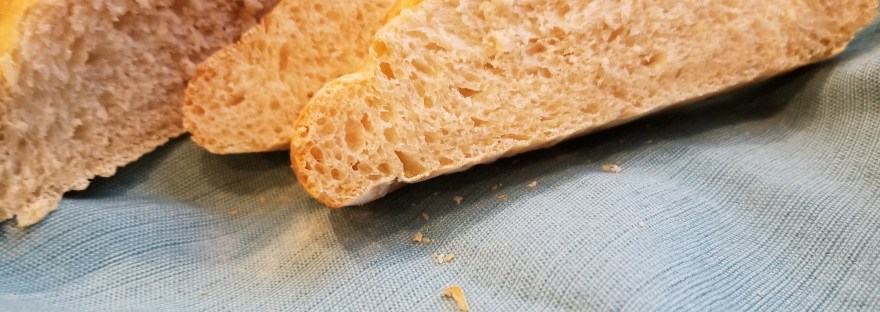
This technical challenge proved difficult (See what I did there?) for many of the contestants on The Great British Baking Show. But it was the plaiting that had them tied up in knots. Outside of that, it’s a pretty basic dough, and if you understand the pattern, you should be able to create a decent loaf.
Flatbreads
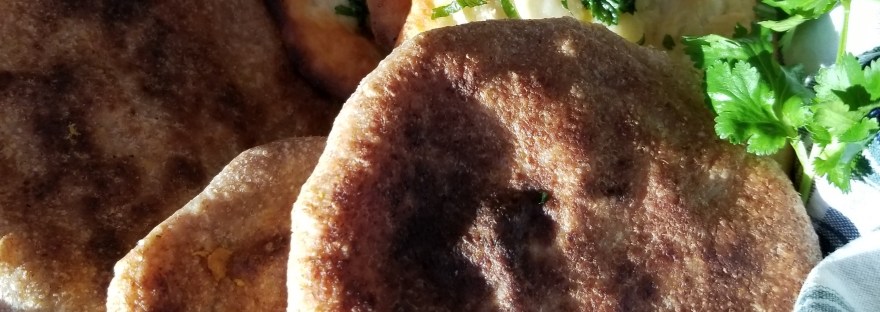
I have so much more respect for the bakers in the tent after attempting this challenge! Not only did they have to make two different kinds of flatbreads (one with yeast and one without), they also had to make them both within 2½ hours! I chose to make naan--because that’s always been my favorite whenever we eat at Indian restaurants--and paratha. I went with a basic naan recipe and topped it with roasted garlic and cilantro. My parathas I decided to stuff with the flavors from my favorite vegetarian chili—sweet potatoes, black beans and spices.
Hidden Design Cake
I’ve been thinking about making this cake ever since I first watched this episode of the Great British Baking Show (2012 season, episode 1). You might even say it was my initial inspiration for this blogging adventure. I love a challenge, and figuring out how to embed a design inside a cake in such a way that it would be visible in every slice is something I’d never thought of before. What design could I make that would be unique but simple enough for me, an amateur baker, to pull off? I thought of the goose that laid the golden egg.
Paul Hollywood’s R-R-R-Rum Babas
Rum babas, or baba aux rhum as the French call them (I always feel like I should roll my Rs when I say it), are of Polish descent but have been claimed by the French, as well as the Italians. Traditionally, the rum baba is made in the shape of an over-sized champagne cork. If it’s made in a circular mold with a hole in the middle it’s known as a savarin. (But who am I to correct Paul Hollywood, whose rum baba recipe calls for just this type of mold!)